Lost Obliquity: The Value That Was Our Moon
by Mark Thomas (TE Mark)
Staff Writer
THE HARSH REALITY: OF OUR VULNERABLE WORLD
“Though she looks as warm as gold, the moon’s harsh mistress can be so cold.” (Jimmy Webb)
With January 9th still 16-days away, the Earth is already yielding to the effects of Jupiter’s gravitational pull. Loping along in its 12-year orbit, it’s as if our system’s gargantuan gas giant is just ahead waiting for us.
As if it knows we lost 76% of our moon’s mass in an unprecedented event – a collision like nothing you or anyone could have imagined – and is now anxious to exert its gravitational influence. Influence that may change everything. Including what if anything survives.
It’s all about axial tilt now. And Earth’s, which was at 23.4 degrees before 5i/Vasily, the 5th recorded interstellar comet passing through our solar system sliced into our moon – pulverising it – sending over half as rocky debris into a cloudlike orbit, is changing by the minute.
28.1 degrees Monday – 29.3 this morning. How few outside the science community knew the importance of a massive moon. That, besides governing tides, almost non-existent since the collision, the regular gravitational tug it placed on our world as it orbited kept us spinning upright like a gently wobbling top in relation to the sun.
What we’re facing now is more dramatic than decreasing tides though. A complete climate shift. Chaos to our ecosystems. Radical warming at the poles during summer and increased freezing in winter. Expanded tropics but with wider temperature variation.
If it reaches the worst-case scenario of 45 degrees, [your ‘alarmist’ prediction] the projections are a hodgepodge of catastrophic events. As Ben Franklin put it: “By failing to prepare you are preparing to fail.”
And where that leaves you, ESA’s rebel astrophysicist and designated spokesperson, besides wishing Ben were here planning your press statement, is wondering what kind of preparedness plan could you or anyone outline for something like this.
IMAGINING OUR DESTINY: AND A 45-DEGREE AXIAL TILT
“A storm was coming, but that’s not what I smelled, it was adventure on the wind.” (Atticus)

Image by StockCake
With the situation changing by the minute, you and all astrophysicists, astronomers, cosmologists and physicists – along with everyone on Earth are watching and waiting to see whose predictions and which models were closest.
And getting the recent updates: floods, hurricanes, tornadoes. Plunging temperatures in the north – rising at the south pole with accelerating sea ice loss. Here, early-winter in Europe, you’re already seeing noticeably less daylight with yesterday’s sunset in Paris just after 4pm.
And with the polar band of 24-hour darkness steadily descending – now closing in on 60 degrees, more every day are willingly or begrudgingly accepting your worst-case scenario may not be as farfetched as it seemed three months ago.
45 degrees would be quite a change. Imagining all of England – indeed most of Europe, Asia, all of Canada and many northern US states becoming the land of constant darkness in winter – and the land of the midnight sun in summer, you’re finding words like profound and dramatic weak and insubstantial.
But adjusting to the changing daylight is the easy part. Technology and our survival instinct will make that an achievable challenge. But when you get to climate and agriculture – seas freezing over – currents changing. That’s a world climate shift. That is a Hollywood disaster movie.
In 16 days, when Earth is at opposition [its closest distance] with Jupiter – and without our natural satellite holding us upright as it has been for billions of years, we run the risk of losing everything. Tipping over like a top-heavy ball. The north pole leaning outward into space – changing the tilt of our planet that gives us our seasons and more.
All because of a comet. But then… there’s something poetic and familiar about that, isn’t there.
OUR MISTRESS MOON: NO LONGER A CAPABLE COMPANION
“And it is He who created the night and the day and the Sun and the moon; all in an orbit are swimming. (Surah Anbiya – Quran)
Image by StockCake
Now walking the corridor with Semele, the task-force climatologist, to deliver your status update to the press and others, under pressure from the agency to keep this less than an impending disaster announcement, you’re pouring over what you’re going to say. How much of the science to give them. How often to answer questions with: We just don’t have that data.
The concept – having to translate something like this is daunting.
“Use examples - with consumable analogies.” Having read it while you walked, Semele hands you back your brief. “Get their focus on your simulations and slides. And avoid the scientific jargon. Especially the equations.”
“Right.” You chuckle. “High school physics with Ms Barron.”
At the conference hall, she turns and looks at you while fixing your collar. “Try not to look so gloomy.”
You squint. “Did you really say that?”
She rolls her eyes and reaches for the door. “Just try.”
SCIENCE AND DESTINY: PAINTING PORTRAITS WITH MATHEMATICS
“Mathematics is the language with which God has written the universe.” (Galileo)
Image by StockCake
While heading into the hall, you can see and feel their tension. It’s in their faces and posture. And it causes you to question how you’ll deliver something like this – so steeped in science – in a way they’ll understand it.
Even while working your laptop with Semele conveying the recent climate anomalies, we believe to be a consequence of this event: the floods in Indonesia, Pakistan and Central Asia and the record low temperatures in Scandinavia, Siberia and Canada, you’re running the data and equations in your head like an out-of-control machine.
Jupiter’s mass – Earth’s mass. Newton’s Law of Universal Gravitation. When at opposition, Jupiter’s pull on Earth is 88% more than it is on Mars when they’re in alignment.
Nervous, like a kid, with Semele fielding questions, you’re still doing it. Running over the data – planning your words.
The Moon’s mass. 7.34 x 10^22 Kilograms. 6.9 million times that of Mars’ Phobos. The gravitational force between the Earth and moon is 1.98 x 10^22 Newtons. Enough to keep us upright wobbling between 22.1 and 24.5 degrees. But not Mars. Phobos’ mass: 1.06 x 10^16 kilograms isn’t enough.
With your mind a blur, struggling to get those numbers and equations out of your head so you can think clearly and communicate calmly, you close your eyes and take a breath – trying to slow it all down.
With the room quiet behind you, you turn to Selene and nod. And move to face them – ready to deliver.
COMMUNICATING THE NATURE: OF THE WAY THE HEAVENS GO
“That perfect, bright experience never falls to nothingness and time will dim the moon.” (DH Lawrence)
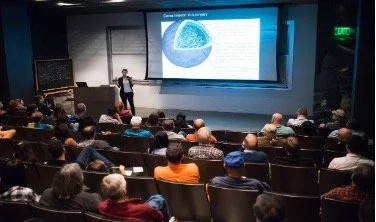
Image by StockCake
In a purely spontaneous move, without a clue how or why, you abandon your prepared slides and grab Semele’s tablet and stylus. You don’t have an explanation – but right now all you can think of is high school physics and Ms Barron and making this simple for them.
Glancing quickly at the LCD wall – changing it to a blank canvass, you begin sketching out a diagram. The Sun and planets – Earth – Mars – Jupiter. Inscribing their orbits. Just like her – enthusiastic and equally passionate.
But to communicate an actual event. An astrophysical beauty, if it were out there on an uninhabited world.
Calm now, you explain briefly Earth’s axial tilt - its Obliquity which was at 23.4 degrees before 5i/Vasily did the unthinkable.
You draw a stick through Earth at a slight angle elaborating on how it wobbles between 22.1 and 24.5 degrees in 41,000-year cycles with a modest impact on climate. You take a moment to field a question about the tilt and its importance – explaining how it gives us our seasons and how it affects currents, polar ice and winds.
Returning to the tablet, you draw our moon inscribing its orbit around Earth. And go on to describe how all bodies in space, depending on their mass, tug on each other. How our moon, pre impact was massive enough to hold us upright against the gravitational pull from the other planets. Specifically, Jupiter.
After a look out over the room, you glance at Semele – who gives you a smile of approval – followed by a slight head shake. Quite aware of what you’re about to do.
From there, you move to your example – Mars. Where you explain how without a massive moon, its current 25-degree tilt can tip to as much as 80 degrees. Almost like Uranus – riding around the sun on its side.
More diagrams. Keeping your voice calm. Doing your best to hold back the equations.
MEASURING AND WEIGHING: PLANETS, MOONS AND COURAGE
When finished, you glance back at your sketch. Decided – feeling fully committed, you turn to your audience.
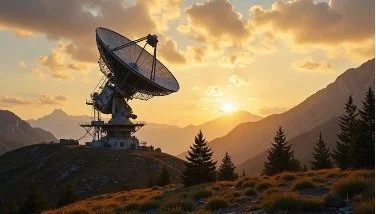
Image by StockCake
“In exoplanetary research, besides looking for planets in the habitable zone, we also try to determine the existence of a massive moon. It’s an essential feature for a planet’s stability. Climate – ocean currents – life.”
The room gets very quiet – with all eyes on your high-school astronomy schematic.
“Dr Simmons…” You recognise the New York Times journalist with a nod. “Mars suddenly at an 80-degree tilt. What effect does that have on its climate?”
“That condition on Mars doesn’t happen suddenly. It takes hundreds of thousands to millions of years. When at 80 degrees, ice builds at the equator and melts at the sun-facing pole. The climate – wind patterns. The oceans before it lost its surface water. Everything changes.”
Having abandoned the administrator’s directive that you soften your delivery, make this sound nicer than you know it’s going to be, you stare into their faces.
And with their complete attention, you speak softly and deliberately.
“It’s all about the tilt. And because of the distribution of our land masses – most in the Northern hemisphere; It’s not going to take millions or even thousands of years. In 16 days, when we’re in direct alignment – Jupiter is going to pull on our top-heavy planet with a force of 2.19 x 10^18 Newtons. Enough to pull us over like a top.”
You watch them absorb that – grasping the implications and vision of what we’re facing. As they shift their eyes to that LCD, you turn to Semele – who nods gently.
IN ETERNAL CHAOS: THE HEAVENS KNOW NO MALICE
“I am free because I alone am morally responsible for everything I do.” (Robert Heinlein – The Moon is a Harsh Mistress)
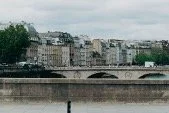
Image by SpaceTech
DH Lawrence said: “We’ve got to live, no matter how many skies have fallen.” Well, the skies haven’t fallen, but they sure are dazzling with the constant streaks from the debris that was once our moon. Breathtaking, it is. Even with the sun in the sky.
Looking out over the Seine from your favourite bench near Point Neuf well before your meeting with the President – sipping your morning Cappuccino, you find yourself marvelling at us.
Joggers and bikers. People walking their dogs – others hurrying to work. What a resilient lot we are. What an impressive species we turned out to be.
Six days until the End of Days, according to every news outlet in the world 12 minutes after your riveting press conference, and looking out over the city; you can only wonder: Did they all miss it? Or did it blur into Daniel Boorstin’s fog of information.
You took a chance, believing in us somehow. That we’d face and survive this. That as TS Eliot said: “If you haven’t the strength to impose your own terms upon life, then you must accept the terms it offers you.”
And even with the Earth’s tilt at 37.1 degrees this morning – and virtually everyone now accepting your ‘alarmist’ prediction, you have this strange pride – and the feeling that we’ll accept the terms we’re being offered. And live a different life.
“Last daylight until March, you know.”
You turn to a girl who pulled from her morning run to lace her shoe on the bench. You don’t know how long she’s been there watching you – lost in thought with your eyes on the morning display. The meteorites falling like electric rain.
But you sense her openness to engage. Like we’re all in this together – heading into the unknown.
“Is that right?”
She turns to the sun – sitting just above the horizon at 10:15 – where it’ll stay until a little after one then drop back down for a very long night.
“It’ll be like Iceland soon. Just… without the volcanoes.” She gives you a smile while zipping open her waist pouch. “Here,” she says handing you a card. “I’m opening a wellness salon on Il Cite. Full spectrum light beds. Mental health counselling. The number is at the bottom. Or you can book online.”
You hold the card with a smile watching her run off, sure now you’re right… we are a resilient lot. And we certainly will adapt. And likely prosper.
WHEN OBSTACLES ARE OPPORTUNITIES: TO BECOME INGENIOUS
“Ingenuity, plus courage, plus work, equals miracles.” (George S Patton)

Image by StockCake
It’s just 12 on an icy-cold, cloudless day in the capital. You’re sitting across from the president who looks up from your conference brief.
For an uncomfortable minute, he sits – staring, appraising you. Perhaps organising his words. How he’ll ask why you did it. Threw your career away when you had so much more to offer. Especially in the days ahead.
You received the call from his office an hour after the briefing – while cleaning out your desk. With Semele offering you support. Praising your valour. Calling it unjust.
You weren’t surprised by the decision. With your impulsive move driven by some idealistic morality; you’d decided to risk throwing the world into panic.
And you’ve questioned your motives. Was it truly just your belief people had the right to know what was ahead? That they deserved to be given the chance to fight, or not fight. That it wasn’t within you to put a spin on it. Make it nice.
Or was it the rebel – craving again the opportunity to be rebellious?
“Tell me something, Josh.”
No longer the wait. The appraisal is complete. “The press conference.”
“No. I think I know your reasons. And since it’s pretty much accepted you were right, and 45 degrees is days away, and the world hasn’t torn itself apart, I had something else I wanted to discuss with you. A project. Something I believe will interest you.”
You look at him with a squint. “An offer, Sir?”
Curious certainly and certainly off balance, you watch him stand, slowly round his desk and take the seat next to you.
REENGINEERING OUR WORLD: FOR ADAPTATION AND SURVIVAL
“In the midst of chaos, there is also opportunity.” (Sun Tzu)
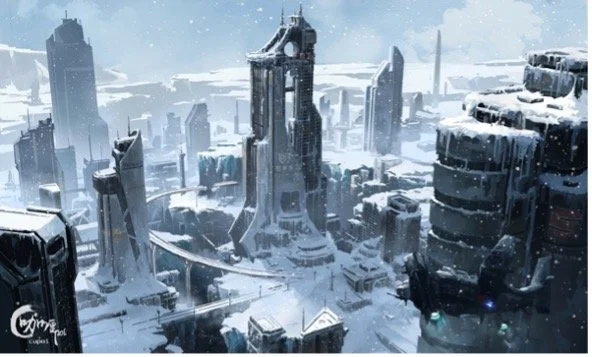
Image by StockCake
Now with the look of a battlefield commander ready to send you on a life-saving mission, or a surgeon ready to tell you there’s a chance – if you’re willing to fight, he looks you in the eyes.
“You said at that meeting Mars’ axial tilt changes cyclically leaning over to as much as 80 degrees - but that it takes hundreds of thousands of years because of its uniform mass distribution.”
“That’s right.”
“But with most of our land masses in the northern hemisphere… it seems we’re looking at few options of stopping this.”
“Stopping it?!” He looks at you. And though you’ve only met him once, you’re aware, somehow of where this is going – and of the project, and why you’re here. “Sir. Planet-scale mass redistribution would be… quite a challenge.”
For the next few minutes, you sit together – picturing the fantasy: cities in Antarctica. Massive dam projects in South America, Africa and Australia. The material laden ships streaming south. A project employing thousands – millions in a global survival effort.
Giving them the opportunity to adapt… to fight, or not fight.
“After next week, we’ll have 13 months until we’re in opposition with Jupiter again?”
You nod. “Yes, Sir.”
He takes a moment – with both of you aware. “Can you model it?”
You look at him with immeasurable respect. And all you can say is…
“…I’ll start immediately, Sir.”
Mark Thomas (T. E. Mark)
StorytellingScience