Imagining Life: With a Computer Like Memory
by Mark Thomas (TE Mark)
Staff Writer
THE MOMENTS WE TREASURED: THAT EXIST NOW AS MEMORIES
“Memory is the diary that we all carry about with us.” (Oscar Wilde)
The week was interminable. Barely sleeping with your concentration nil, you counted the days then the hours and minutes imagining the shuttle and iconic Lander and above throughout the vast hall; relic probes and satellites – and the rockets that lifted them into orbit.
Just stepping in through the doors, you lose the February chill. That museum smell – unique and familiar yet hard to describe. And the lighting, dark like deep space to capture and own not trick your senses.
And the images on the walls of galaxies and nebulae and exploding stars, and of those men and women who once slept like you do now – with visions of the adventure.
“The Simulator?” asks your dad as if this were even an option.
You take a moment – giving the impression you’re thinking it over. If there’s one thing you’ve learned in your nine years, it’s the propitious use of adult psychology. “You’ve been thinking about it all week, haven’t you.”
“Pretty much,” he says moving ahead in the queue.
“Get any sleep at all,” you ask?
“Here and there, you?”
You stare into his eyes – appreciating him for many reasons. His dedication to you, prioritising above everything your education and future. And for his honesty of course.
You’re almost ashamed of your next move. The manipulation, however, is a regrettable necessity. With you at the controls, you stand a proven 23.6% better chance of staying alive beyond the 5pm closing.
“You were in the pilot seat last time.”
“You remember it that way?”
You extend a compassionate hand to his shoulder, look sadly into his eyes and nod – before turning and taking off like a bat-out-of-hell for the stairs up to the simulator.
PRE-AUGMENTATION: MEMORY ENCODING, STORAGE AND RETRIEVAL
“We all have our time machines. Some take us back, they’re called memories. Some take us forward, they’re called dreams.” (Jeremy Irons)
Image by StockCake
“Fear inducing or emotionally positive events are often easier to recall than neutral ones, due in part to the amygdala’s role in strengthening memory consolidation through emotional tagging.” (Emilia Thorup)
Along with association, operant and classical learning techniques, we once relied on emotional attachment for memory retrieval. Positive episodes, charged with child like exuberance would surface often involuntarily. Seldom upon demand when they could prove useful.
Though awards and praise for successes – criticism and bad marks for failures yielded measured results; the randomness and unpredictability of memory retrieval presented early neuroscientists and memory psychologists a challenge.
Though artificially induced emotional tagging revealed a path to enhanced memory retrieval, this behaviour modification was prudently abandoned. The human mind is fragile. Artificially attaching negative emotions to episodic memories for poor decisions or delayed reactions was unreliable and often detrimental leading to emotional instability, nervous breakdowns and suicides.
Positive reinforcement with mood enhancing drugs or synthetic stimulation of the amygdala and hippocampus was similarly destructive yielding dependencies and withdrawal symptoms when subjects were not performing behaviourally modified actions.
The inventive found ways to work for the reward continuously. Never breaking to eat, sleep or communicate, they became machine like zombies. Then vegetables.
That our memories shaped and defined perhaps everything about us was incontestable. Our enthusiasm and curiosity – our lust to explore. Our irrational fears and insecurities. Decisions and choices, preferences and values. Even the selection of our mates.
But the mechanism was flawed. Memories, potentially useful episodes often got lost or buried. Many were overwritten or discarded. We functioned, but even when we turned to extended mind, storage devices like notepads, computers and AI assistants, there were delay times.
Often detrimental, we made ill-equipped, ill-advised decisions when time was an issue, and we lacked the luxury of a lengthy review of our catalogued past.
TECHNOLOGICALLY AUGMENTED: MEMORY PROCESSING & RECALL
“Any man could, if he were so inclined, be the sculptor of his own brain.” (Santiago Ramon Y Cajal)
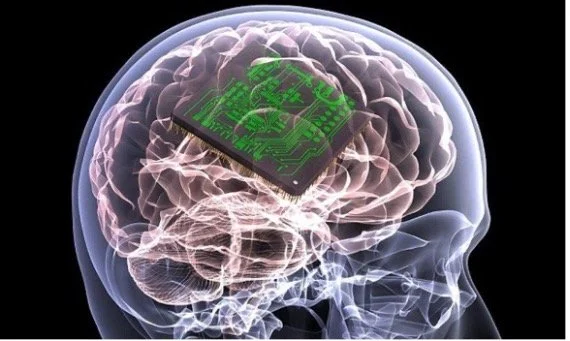
Image by StockCake
With neural augmentation, we have immediate, on demand access to our memories. Episodes that can assist our decisions are played out for us as algorithmically selected, instantaneous, neural simulations.
Given the need to act, to supply the optimum formula for success, we examine our earlier actions and their results with mathematical precision.
Whether planning a trip across town, across the country, through a dark room or to Mars, we base our decisions – our course, course corrections and reactions to unexpected circumstances on unthinkably fast evaluations of everything we’ve recorded. Our personal experiences and decisions – those we’ve observed, studied and read about or simply overheard.
At work, we’re incomparably efficient. And of course, if comparably trained and educated, interchangeable. We’ve mostly eliminated variable mission outcomes. The stability is inherent and unchallenged. Successful manoeuvres and decisions, once attributed to individuals, are now catalogued by situation and shared.
We function as a true team with any crew we’re assigned. And with many identical memory segments, we’ve nearly eliminated the need for communication. Our forward progress even without those once fortunate but chaotic leaps is predictable with infrequent surprises.
Whether this merger with our technology has made us less human and more like computational beings is a subject of constant debate. Those in the tech industry like to call it the next step in our evolution – like when we started using tools.
THE PSYCHOLOGICAL CHANGES: FROM AUGMENTATION TECHNOLOGY
“Memories are not just passive records of the past; they actively shape how we think, feel and act in the present and the future.” (Mar Yebra et al)
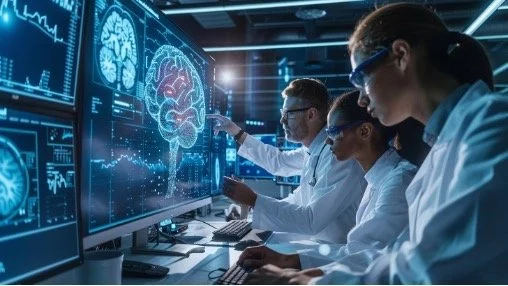
Image by StockCake
How are we different psychologically, socially, experientially with full memory recall? Are we improved – and are we an improved species?
That total recall has changed us is unchallenged. Our psychologists and neuroscientists publish their research on this daily.
An evolutionary psychologist in Madrid recently stated his concern that people were substituting tried and tested, safe solutions to situations based on memories of past solutions for creativity. And that we would ultimately suffer as a species from the loss.
He also said we were losing the ability to be introspective – many choosing instead to live in vivid replays of their past for the satisfying, stimulant effect. Some for nostalgia or to escape the sad feelings from the loss of a loved one.
And that the replays were a poor substitution as they delivered passive entertainment but little guidance. Like losing yourself in an on-demand, immersive cinema rather than resourcing a decision or direction from your inner exploration.
HOW WE’VE CHANGED FUNCTIONALLY: WITH MEMORIES ON DEMAND
“Memories make us who we are. Without them, we are nothing.” (Melissa Grey)
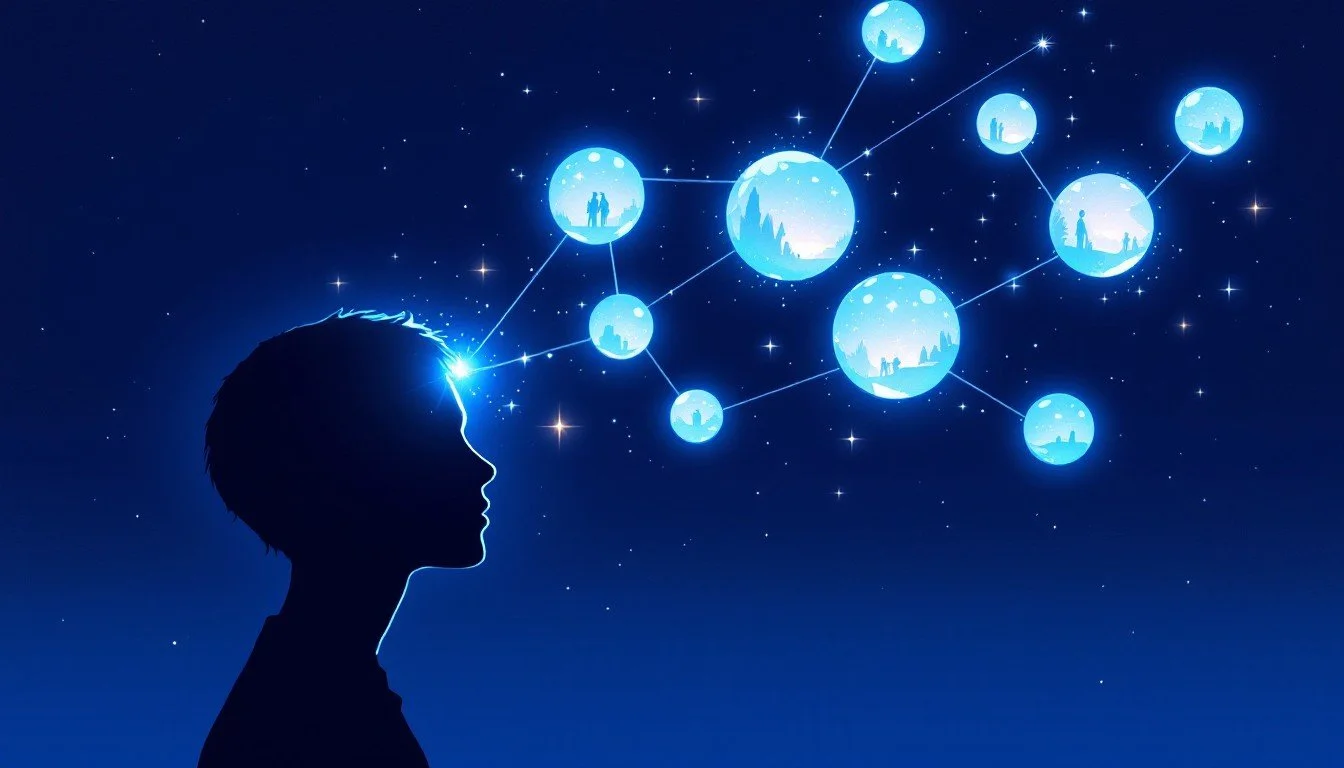
Image by StockCake
One thing is clear. Memories yield actions - actions are predicated on memories. Without the ability to visualise, run an internal simulation of yourself getting up from a sofa, or reaching for a cup of coffee or the rotational thruster controls in the NASA simulator, you won’t – or can’t. Block all access to your memories, you’d be incapacitated.
Probably unable to think.
With our neural enhancement prostheses, there’s little debate that we’ve improved cognitive functionality and our capabilities. Mistakes are rare. Our actions are never hindered by those incumbering moments of indecision. Navigating our environment, once an exploration of the unknown, is now effortless, mathematical and methodical.
This isn’t to say unforeseen or unexpected situations don’t happen. They do, and there are losses. But with review and encoding of the occurrence, the manoeuvre leading to the fatal error, recurrence of the event is systematically avoided.
Losses, even of colleagues, friends and loved ones that led to something vital being learned, are embraced. The knowledge gained from these incidents are viewed as invaluable additions to our collective progress.
With full access to our memories, even those seemingly insignificant childhood experiences, there’s seldom a time when we’re left indecisive, acting impulsively or improvising. If we’ve traded the once useful ability to conceptualise a novel concept for the safety and stability we’ve gained, so be it.
The claimants that we’re stagnating are 22% less now than they were 5 years ago and projected to be 35% less by the end of the decade. And to date; there is no conclusive evidence that supports our need to conceptualise hypothetical scenarios. Especially with full memory accessibility.
OUR BRAINS ARE MACHINES: RUNNING ENDLESS SIMULATIONS
“You will have to live with those memories and make them into something new.” (TS Eliot)

Image by StockCake
Now in the Apollo simulator handling the controls with your navigator (dad) next to you, you watch the stars pan by on the large LCD as the Command Service Module completes its 180-degree turn in space while maintaining the same velocity and altitude as the Saturn V launch vehicle.
There’s intermittent chatter from NASA filling the CSM; the flight controller reading off your progress – your attempted docking and extraction of the Lunar Lander from the S-IVB. Without a clean capture, there’s no mission. Without the LM, there’s no landing on the moon, and this was a wasted trip.
“Check your altitude.” Your dad eyes the navigation monitor above him.
“I’ve got it.” You tap the control arm – just finger taps watching the nose of the CSM come about. “Keep giving me the distance and velocity.”
“You’re at six metres. 9,514 metres per second.” He reaches above adding the view from an outside camera. “Velocity is good. Altitude is good. Five metres.”
You can see the docking cone on the LM now, glistening in the sun. There’s beauty in this moment that is indescribable. A type of concentration that excites but also calms. You’re in total control, and you cannot imagine a better feeling.
“Four metres – velocity is holding at 9,514mps. Translation thrusters are now in shutdown.” Your dad glances over. “Done this before?”
With both hands working and your eye stuck to that navigation sight glass, you suppress the urge to laugh. “Just keep the numbers coming.”
Without looking, you know your dad is smiling. He loves your enthusiasm – he helped you cultivate it. And he has no doubt where this will take you.
“Three metres, velocity is… wait… Audrey, hold on.”
“What’s wrong?”
“Wait!”
A red indicator light starts flashing. Then an alarm. You pull your eye from the sight glass and look over at your dad who is hitting buttons over his head. “What?!”
“We’ve lost the rotation thrusters - now losing altitude.”
“How? I didn’t do anything!”
“9,516 metres per second! 9,518. 9,520. Go into your Abort Guidance System and initiate a reverse burn or we’re going to slam into the S-IVB.”
With the alarms and flashing indicators – and the Houston flight controller’s voice echoing in the cabin, you push away the sight glass and decide on a manual burn – a reverse thrust to pull back or you’re not only going to slam into the Saturn V and kill your chances of a moon landing, you’re going to kill yourself and the crew.
“I’m going to do a manual abort burn in three seconds.”
Your dad shoots you a look. “Do you have a specific aversion to the Abort Guidance System?!”
“Counting down at three –”
“Or mission protocol?!”
“ – Two – one –“
With the command module rumbling from the reverse thrusters, and the Saturn V falling away on the simulator’s LCD, he smiles – watching you with pride and respect. For the strength and daring – and the ability to think quickly faced with losing your 23.6% advantage while in the pilot seat.
THE VALUE IN FORGETFULNESS
“Forgetfulness is a form of freedom.” (Khalil Gibran)
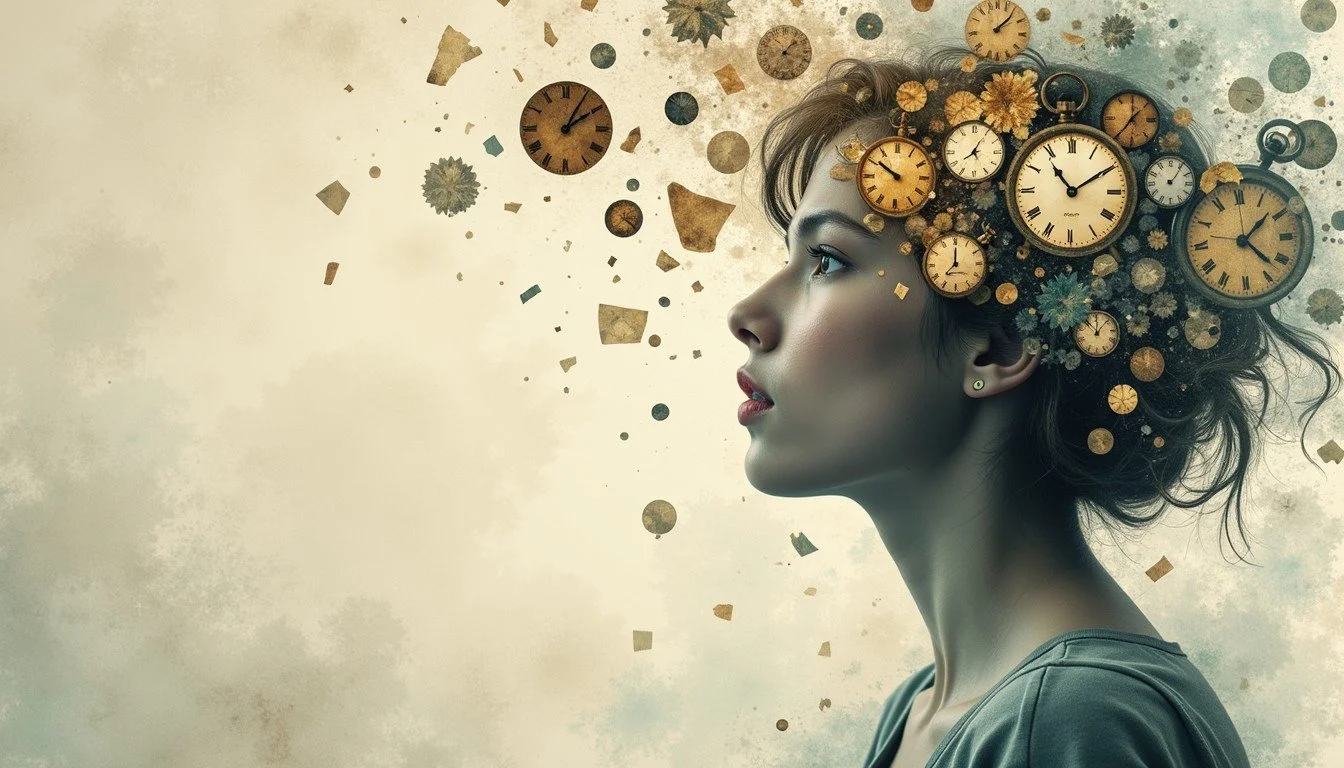
Image by StockCake
“Forgetting allows the brain to prioritize information and manage the vast amount of incoming data.” Writes Scott A. Small MD in his book Forgetting: The Benefits of Not Remembering. Adding: “It helps us focus on what matters, move on from negative experiences, and manage the vast amount of incoming data.”
We’re an anthology. A collection of short and long stories. Feature length and short films that prior to augmentation were available and useful or detrimental and debilitating until they weren’t. And when they weren’t; we questioned why. Why did our brains bury this memory or discard that one?
Why was that formula for solving a permutations problem there when you needed it but the process of balancing a chemical equation was unavailable? Why did you remember the face and name of someone you met at a party once but had no recollection of your sister’s friend who visited three years ago for a week?
And then there were the memories our brains seem to have deliberately discarded. We questioned that too. Were they subconscious decisions made to protect us? Like a defence mechanism? And was the disposal always beneficial?
Wasn’t there value in remembering that slip on the ice that landed you in the hospital? So, you’d be more careful in the future? Or wear different shoes when the temperature dropped?
Or the bothersome drunks in front of that pub on your way home from school? Not a hard decision to reroute your journey home – assuming you still held the memory of that troubling event.
This is another dispute among memory psychologists. And with our enhanced memory storage and retrieval, while graciously embracing the vivid recall of certain painful memories; we’ve mostly learned to accept the others.
And this has created a new dynamic. One few anticipated.
EVERYONE A PERFECT MEMORY RECORDING DEVICE
“Under observation, we act less free, which means we effectively are less free.” (Edward Snowden)

Image by StockCake
With our entire population carrying perfect, retrievable, autobiographical memories, and everyone aware their actions are being recorded and catalogued, we live in a world without crime or police or jails – without judges, lawyers or law courts.
There were concerns at first – about how people may become artificial - walking around as if perpetually on stage or under a microscope. As George Orwell famously wrote: “You had to live in the assumption that every sound you made was overheard, and, except in darkness, every movement scrutinised.”
But we are an adaptable species. We no longer possess even the capabilities of anger, hostility, rage, jealousy or ill-behaviour.
In addition, with those we know having our facial expressions and body language catalogued, essentially making them impeccable lie detectors, that peculiar predilection we once had for dishonesty is something only found now in literature.
A recent article by a renowned neuroscientist suggested our memories were in effect becoming standardised. That people were making cumulative, group decisions without verbal or written communication. That she believed we were on the cusp of thinking collectively.
If true, this would be an interesting next step in our evolution.
COLLECTIVE INTELLIGENCE: SUPERINTELLIGENCE
Collective Superintelligence: A system composed of smaller intellects such that the system’s overall performance across many very general domains vastly outstrips that of any current cognitive system. (Nick Bostrom – Superintelligence)

Image by StockCake
As a species, we’ve been a collective intelligence since our first civilisations. An individual doesn’t build a particle collider, car or even devise the construction technology necessary to build a hut without learning from and sharing knowledge with others.
Sharing memories via our neural prostheses, planning and making decisions based on those memories; there is little doubt we’re moving in the direction of collective intelligence or superintelligence. How this will this affect us? How has it already affected us?
The pragmatists will say: We move forward as we always have, sharing knowledge, technology and our experiences. We study and learn from each other as we always have. That we possess many of the same memories and have to an extent surrendered our uniqueness was already in progress before memory augmentation technology.
Schools, religions, work teams, countries, national and international organisations, think tanks – people have been sharing their knowledge, ideas and experiences with the goal of collective advancement for millennia.
We are the result of a continuing process of adaptation. Our ancestors learned by observation – then by writing down their observations for others. Looking at us and our safe, unified, predictable progress forward; it’s difficult to imagine anything but a positive outcome.
THE VALUE IN OUR MEMORIES: AND THE MEMORIES OF OTHERS
“Where is the life we have lost in living? Where is the wisdom we have lost in knowledge? Where is the knowledge we have lost in information?” (TS Eliot)

Image by StockCake
Breakdowns of the Titan-9 Rover are infrequent. They’ve happened on three earlier missions to the moon’s equatorial depression.
But never on a mission you’ve commanded. And never with an away crew stranded kilometres from the Command Module 16 minutes before mandatory liftoff to make the launch window for a successful return to Earth.
You have a decision to make. Difficult as it is; it’s what you were trained for and why you were chosen.
Following protocol, you run your simulations. Prior mission failures – specifically those resulting in casualties. Europa, Ganymede, Iapetus. Pilots with stranded crews and narrow launch windows had made the tough call. Lift-off and abandon – or miss the window and lose the Rover crew and the Command Module – Loss of the entire mission.
But how… and why did your implant pull up a shared memory from an early astronaut’s experience inside a museum simulator with her father 175 years ago? You learned early not to question the AQI Memory Search Engine. Its situational diagnostic and retrieval capabilities are praised by the space agencies and the private sector for their faultless record.
How odd you think being guided here on a moon 1.2 billion kilometres from Earth by an astronaut’s memory from her 9-year-old experience extracting a Lunar Lander from an S-IVB Launch Vehicle in low Earth orbit. In a planetarium simulator with her father playing navigator – cautioning her on her rebellious decision to violate agency protocol.
But just thinking about it; the logic surfaces. The 10th generation augmentation software you uploaded before the mission. An agency conclusion that we’d lost something over the years. Followed procedure when critical thinking, improvisation, creativity – and yes, even violating protocol could yield those unpredictable leaps.
The V-10 software brought in something new – also very old and very precious.
After shooting off a quick update to AESA, one they’ll get when this is long over, you reach forward and begin a Priority Command Override of the programmed escape launch – taking manual control of the ship.
“Amy. What’s your status?”
TODAY’S DECISIONS: GUIDED BY ANCIENT MEMORIES
“It is impossible to design a system so perfect that no one needs to be good.” (TS Eliot)
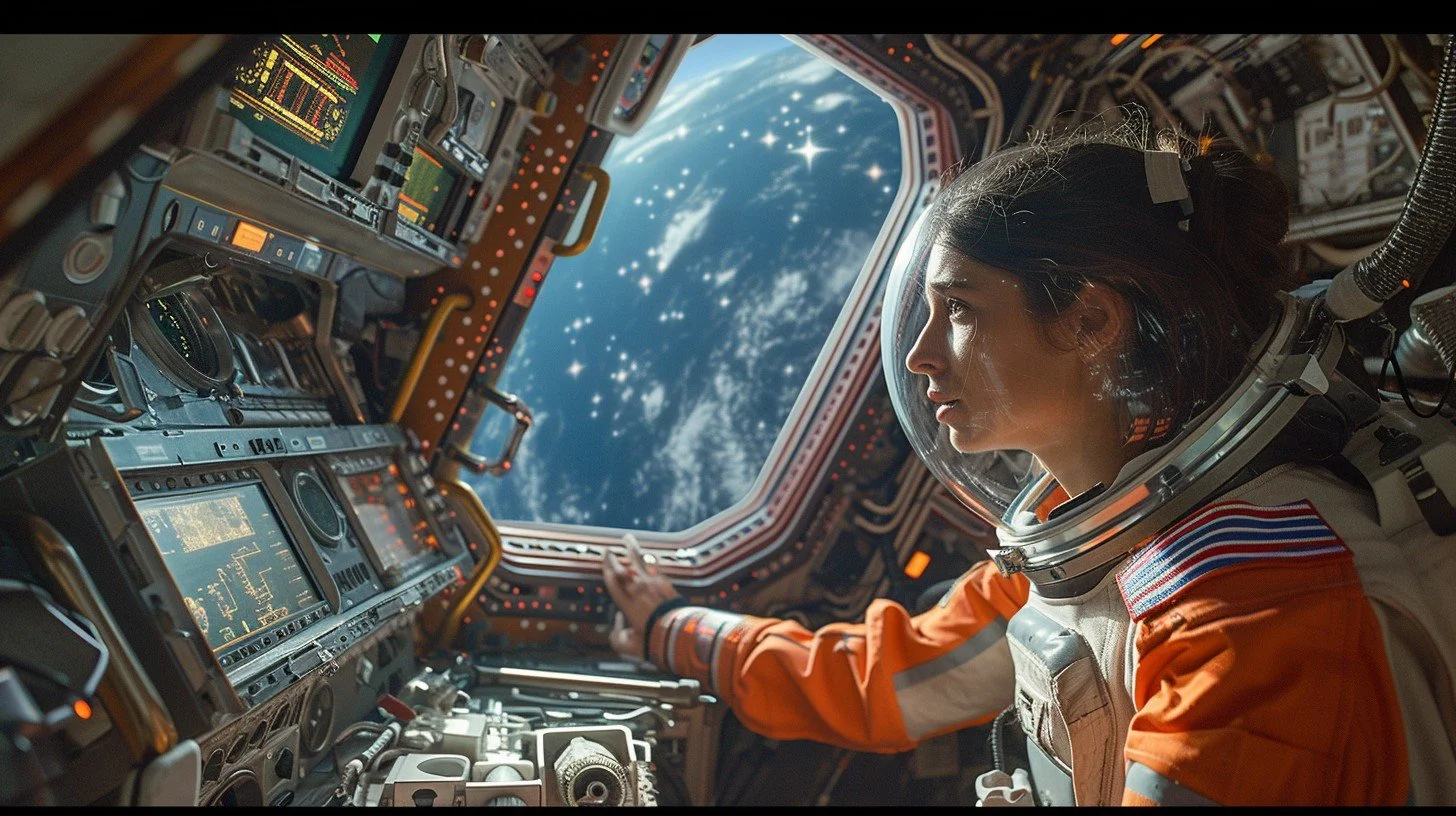
Image by StockCake
With the icy winds already blowing at 79 kph, you can barely hear your astrophysicist’s response echoing inside the CM. “We’re not going anywhere, Huygens. The G1s are frozen. Even if we could free those external dampers, we’re 22 minutes out. Maybe more in this storm.”
“Okay, listen.” You initiate the manual burn; the CM begins to rumble and lift. Looking east over the pale, Titan horizon with Saturn filling the sky, and Iapetus, Enceladus and Dione all at different phases just above the horizon, you extend a hand to the com and type.
“I’m sending you an improvised docking procedure, and I need you to follow it. Get Martin and get up top into the docking tube. I’m coming to get you – my ETA is four minutes.”
“Keiko! Are you serious?”
“Do it Amy. I’ve reviewed the specs. Though it’s never been done, the T-9s collar is compatible with the Huygens’ retrac. I’m going to set this thing down right on top of you – you and Martin are going to climb in through that tube – and we’re going to make that escape window.”
You’re now lifting away from the surface blowing up sand. Red warning lights are flashing in the Command Module. The electronic voice from the computer is constant – reading off the manual burn parameters. With 2-minutes showing on the con – you see the Rover ahead at the base of a ridge.
With your hand on the control arm – just finger taps adjusting the burn, you hear a voice. Soft – distinguished. Gentle – warm. Not from the computer – not electronic. It’s coming from inside the Command Module.
“Done this before?”
Alarmed, you spin and glance over – and will, if this works and you make it back to Earth, one day tell the agency therapist how at that moment – struggling with your fears and your insecurities - you saw a man with a kind face looking at you from the navigator’s seat.
And how you nodded – and impulsively responded: “Just keep the numbers coming.” And watched him smile with pride – and return his eyes to the navigation console – and continue reading off your velocity, altitude and distance – knowing, somehow, how pleased he was with your determination to do whatever it took to save your crew.
Mark Thomas (TE Mark)
StorytellingScience.org