You’re Living in a Computer Simulation: A Digital Reality You Programmed

by Mark Thomas
Staff Writer
QUESTION THE GENESIS: OF THE GENIUS
“If you hear a voice within you say: ‘You cannot paint,’ then by all means paint, and that voice will be silenced.” (Vincent Van Gogh)
It’s nearly 3 am. You’ve been at it all night – actually all night every night this week. The building you’re designing for your final is run-of-the-mill rubbish. The facades are institutional. Even the atrium, three days of work is weak.
From the outside, it’s a hospital with a quaint driveway – clever fountain. This one isn’t making it into Architectural Digest, the Review or even getting you a grade.
You stare into your model desperate for an idea. Something you can add. Something new – something that will make it stand out.
You’re ready to chuck the drawing and the whole Architecture and Engineering career when suddenly, seemingly from nowhere; inspiration explodes.
Meaningful, unstoppable – ideas are pouring in as if you’ve merged with some external consciousness or borrowed someone’s brain. You’re suddenly a super designer with experience, instinct and intuition.
Creating custom elements. Redesigning the atrium as if you’ve already sketched it out in your head. Like Mozart with AutoCAD rather than parchment and quill.
You’ve tapped into something special almost commanding an explanation. But riding the wave like a surfer, you know better than to break.
Layer after layer – element after element – floor after floor. It’s magic – explosive, like the building is designing itself.
Hours later with your project complete and your dorm window bright – and time to pack it up and head to class, you sit back and think. This isn’t the first time. And it can’t all have come from you.
Puling back, you stare at your hands. “This is a simulation isn’t it.”
It was a fun debate in philosophy. The Computer Science kids were all over it. But so were you. And now convinced, you’re also convinced of something else - a new twist to the simulation hypothesis.
With a penetrating stare into your drawing and even deeper, you let it out, “Not only is this a simulation, but I’m the programmer.” And now the twist - eyes up at the ceiling. “I’m you.”
THE SIMULATION THESIS: YOU’RE LIVING IN A PROGRAMMED REALITY
“The Matrix is everywhere. It is all around us. It is the world that has been pulled over your eyes to blind you from the truth.” (Morpheus – From The Matrix)
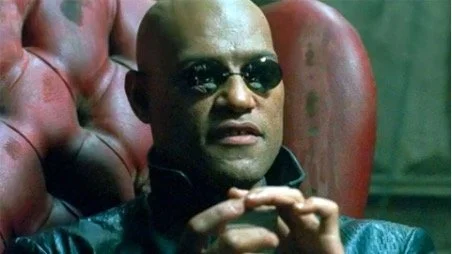
Image by Warner Bros
The Simulation thesis or thought experiment is not new. In his 1641 Meditations, Renes Descartes imagined our perceptions of the world being manufactured by an external agent. He hypothesized a powerful mind controlling ‘evil demon’ deceiving us, creating our reality.
The Brain in a Vat thought experiment by philosopher Gilbert Harman in 1973, critiqued later by Hilary Putnam, introduced the idea of a vat of life-sustaining fluid with a scientist placing a human brain into it then connecting it to a supercomputer resulting in a simulated reality.
Oxford Philosopher Nick Bostrom used technological advancements to theorise a purely artificial simulation designed by a future post-human or alien programmer.
Then The Matrix by the Wachowski brothers did more than popularise the simulation thesis. It delivered ideas prominent philosophers, neuroscientists and physicists use in their lectures.
One being the scene where Tank uploads the pilot program for a Huey B-212 helicopter into Trinity’s digital avatar inside the matrix. Allowing her to fly it like a veteran aviator.
Kind of the same thing that happened to you earlier. With one fundamental difference – something you’re convinced of now while locking your bike to the rack on campus outside the Architecture building.
It’s not Tank, and it’s not God who probably wouldn’t help you anyway. You don’t go to church, and you only pray when you’re certain whatever virus you’ve contracted is fatal. Vaulting the stairs, you grab the door with high-voltage confidence. “It’s me!”
Charged, you head inside and start up.
Let’s face it. How often has this or something like it happened? Hitting the 2nd floor, you turn into the hallway. Nights when you’ve been up until dawn cramming – or last week when you were looking for that engineering formula.
It wasn’t there – wasn’t there or anywhere – then one minute left on the exam and, what? Desperation found the hidden file? The brain works that way?!
Now at the door, you glance at the ceiling in the corridor and speak in a whisper after making sure there’s no one around to see and possibly report you. “I know you’re selective… but stick with me today. This one’s important.”
Pulling back the door, you head for everyone’s favourite module, (hardly mysterious it’s available) grab the chair and drop in eager to upload your masterpiece.
YOU’RE THE CREATOR: OF YOUR OWN SIMULATED WORLD
“We are living in a computer-programmed reality, and the only clue we have to it is when some variable is changed.” (Phillip K Dick)

Image by StockCake
In his 2003 paper: Are You Living in a Computer Simulation, Philosopher Nick Bostrom listed three propositions – arguing at least one to be true:
1) the human species is very likely to go extinct before reaching a post-human stage; 2) any posthuman civilisation is extremely unlikely to run a significant number of simulations of their evolutionary history (or variations thereof); 3) we are almost certainly living in a simulation.
In Part III of that paper, he stated: ‘At the current stage of technological development, we have neither sufficiently powerful hardware nor the requisite software to create conscious minds in computers.’
‘But persuasive arguments have been given to the effect that if technological progress continues unabated these shortcomings will be overcome. Some argue this may only be a few decades away.’
Oddly, a consciouss mind more than a universe in a box was the contested issue in Philosophy Tuesday during the simulation debate. But then theoretical physicists and cosmologists often describe what they do: analyse and describe the universe as small potatoes compared to what neuroscientists do: analyse and describe the human brain – especially consciousness.
So, now you’re wondering on your way across campus after an almost surreal day, aware future you out there cracked digital consciousness; how often you’ve been helped in the past.
How many of your decisions were yours? Architecture. Cal. Veronica, Leticia, Julie. And the biggest question of all, certain now of this enigmatic connection you have with the, or one of the programmers of this universe; how you’ll proceed.
That last part hits you while heading out onto Bancroft. This relationship you have with outside you, before you start exploiting it: riding your bike unconcerned out in front of someone’s Ferrari, or just taking the Ferrari, needs to be thought through.
Assuming you’re not the sole post-human or alien designer of this sim, and there may be guidelines for what assistance he, it or God-forbid she can give you; it may be prudent to establish your own boundaries and expectations. You wouldn’t want to get cocky and ruin this.
You wish you’d known, however, in February when Leticia broke up with you. Called you self-centred. Yelled in the restaurant: “You think the whole world revolves around you, don’t you.”
Imagine the response you’d have for her today. Before threatening to have her deleted.
Now outside Strada with your bike up on the walk locking it to a rack; you look in through the window. Julie. Patient as always. More about some things than you are. A quick glance up with a mischievous grin on your way to the door.
“It would be the way to top off a great day.” Now at the door, you throw one last glance skyward. “Think about it?”
MIND – BODY DUALISM: EXPLORING THIS PHILOSOPHICALLY
“I am not in my body as a sailor is in his ship.” (Renes Descartes)

Image by StockCake
Heading back from Julie’s flat at, yup, 3 am having been awake almost 42 hours, you’re spent and walking your bike in the middle of the street. Odd how alert you are. Possibly as odd as the conversation you’re having with you – your entangled partner? Overlord?
One thing you’re finding is your programmer buddy does favour his dominant role - responding infrequently – only when it pleases him and usually just guidance. Not really engaging conversation.
“Are you part of a team? And I’m just your, what… avatar? Like in some alien VR game? Giving you the opportunity to explore your work from the inside while also out there looking in?” Nothing. You’re sure he hears you. Just doesn’t feel the need to respond.
A stop at the light on Telegraph. It’s flashing yellow, so there’s no real reason to stop but you do anyway. “So, back there with Julie. Did you enjoy that too? I mean… anything?”
You need to get some sleep. And you should get out of the street.
That’s pretty much it. Hardly a conversation really. All going on in your head except for your part which, it being 3 am in a college town, you feel safe. At 3 am here the cops only stop if you’re not talking to yourself or yelling obscenities at politicians or God.
While watching the light flash, no traffic, you start thinking about this duality and your sudden awareness of it. There’s nothing you can’t or wouldn’t share, obviously. Personal feelings and desires. Inner dialogue – transient thoughts. Your past. Everything you’ve ever done? God…
Now crossing, you pull up mind – body dualism, a recent discussion in Professor Mark’s class. Renes Descartes’ mind-body or substance dualism argues the mind and body are different, fundamentally distinct substances. According to Descartes, the mind is an outside the body thinking thing and the body, its host is a material extended machine.
Though no one really buys that anymore, it’s become a functional necessity for you. And it raises fascinating questions.
“Why are you helping me? But always on your terms. Or are you. My bikes keep getting stolen. What’s that about? Some kind of stochastic optimisation algorithm? Free will? Is this a study project for you? Slam the code in – sit back and take notes on how things turn out?”
Still nothing. Which is moving towards annoying. Now walking up the drive to your dorm, you’re a little pissed. Shouldn’t be, but oddly after an almost supernatural day and night, these bad things that have happened to you start surfacing.
And really? Now aware they didn’t have to, you’re just after an explanation, even one beyond your comprehension.
Keep your bike in the kitchen from now on.
Just at the steps, you begin laughing while shouldering your bike – ready for the walk up two flights.
LEARNING THE BOUNDARIES: OF THE SIM FROM WITHIN
“By doubting we are led to question, by questioning we are led to the truth.” (Peter Abelard)
Image by StockCake
It was Morpheus in the Matrix who said: “Some rules can be bent; others can be broken,” before kicking the shit out of Neo in a simulated karate dojo. And that pretty much paraphrases your second morning as the one. Not Neo the anticipated saviour of humanity; Just Sean, the enlightened one.
Who woke late – barely made it to Technical Editing where you had to read an academic paper from the Journal of Mathematical Physics, work the equations and write a technical summary. Nice that your entangled overlord chose to remind you the moment you reached consciousness this was going to determine your grade for the semester.
On adrenaline or who knows what, you made it to class, read that piece on Graph Theory and Combinatorics, wrote a commanding summary and even fixed an equation.
Now after class, while heading for the stairs you decide to ask: “Was that all me, or did you help?” Heading down, you’re not surprised at the silence.
You’re learning - and sure now of something you believe you already knew. He’s smart – thinks a billion or trillion times faster than you and is selective with mathematical precision what he gives you.
Indicating there’s a strategy. One you can’t stop working on.
After leaving Wheeler, you start for The Center while texting Julie about last night – wondering why she hasn’t written, still carrying on with your philosophical enquiry.
“Why not a better sim? You’re seeing it through my eyes and from out there. Why not an improved version? Without wars and homeless people?”
Concentrate on your work. And don’t worry about Julie. She’ll call you in an hour.
This is an unsettling part. Outside, entangled programmer you apparently knows everything. What everyone’s doing at any given moment – conceivably / probably everywhere on Earth. Maybe in our universe.
Which is more than mindboggling. But the sidestepping of your questions is becoming frustrating. A nice tactic though. You ask a question; you get casual guidance that works to derail you while diffusing any potential angst.
You want the continued assistance, and he knows it – and uses that. And God, how this became a psychological chess tournament this quickly is weird.
It’s odd, now in the café grabbing a boxed salad from the case, wondering why you’re not finding this whole experience objectionable. “Shit! Wait!”
You have enough on your Cal Debit card.
With a smile, you reach for your wallet and head for the counter. No longer questioning why you’re not finding this objectionable.
QUESTIONING THE DESIGN LOGIC: THE SIM FROM WITHOUT
“Humanity is a huge aggregate lie, and a huge lie is less than a small truth.” (DH Lawrence)
Image by StockCake
Simulation proponents typically offer advances in computer power and projections as justification for their belief. With some futurists claiming we’re decades away from simulating an entire universe with living, conscious beings inside a machine ourselves.
The argument goes: That if we’ll be there shortly, someone else, [an alien or future post-human civilisation] already has and therefore we’re logically inside one of those ancestor simulations Bostrom spoke of in his 2003 paper.
As for that digital consciousness hurdle, Ray Kurzweil wrote in his 2024 book The Singularity is Nearer: “Replicating all the information and processes of the human brain will be possible during the lifetimes of most people alive today.”
Two days ago, you would have argued against that ‘probability due to possibility’ thesis. Saying it’s analogous to claiming you’ll be at MIT next year studying astrophysics after collecting the prize money from your Nobel, Pulitzer and the lotto.
Sitting outside the café with your salad and laptop open, distracted – consumed with this debate, you glance away from your drawing just in time to catch a kid fall hard off his skateboard.
You watch him get up, bruised and wincing. It brings back your broken wrist and makes you think about physics, the structure and logic of the sim.
“Why not an anti-gravity layer? Just a few centimetres up from the ground.” Yet another question deemed unworthy, you turn back to your Mechanical Engineering spec. “Nothing can go faster than light. No Star Trek.” A look back up. “Is there a reason for that? Why wouldn’t you want us exploring the galaxy?”
Too distracted for mechanical engineering, or anything other than your obsession now with assembling reason for the structure of this artificial reality: the physics – the logic of the sim and what you see as flaws, you close your drawing and think.
What an odd turn. While you’ve assumed your outside, entangled counterpart coded you in here so he could see and experience this world through you, you’re trying to see it from his perspective out there. Who? Where? How many? Are they also living in a simulation?
That’s natural. You’re intelligent and naturally curious.
That was a real response to something you didn’t even voice. Then it occurs to you. “Post-human civilisation. And we’re your ancestor simulation, aren’t we.” Laptop closed. You’re unable to think about engineering.
“This isn’t for study. It’s for hijacking - living through us. Because you’ve progressed but lost the ability to feel.”
Just like that, with this new revelation; something has changed. Something disquieting you’ll need to spend more time with. Unfortunately, time is tight right now. You’re obsessing, and you still have a life to live. Manufactured or not.
It’s off for your bike.
GRASPING THE PURPOSE: WHY THIS SIMULATION AND NOT OTHERS
“The purpose of life is to discover your gift. The work of life is to develop it. The meaning of life is to give your gift away.” (David Viscott)
Image by StockCake
Reaching the post-human phase, running ancestor programs may be an obvious pastime simply because of available computer power. Assuming fully digital, immortal beings, there also may be nothing else to do.
In his paper Are You Living in a Computer Simulation, Bostrom speculated on the advanced civilisations that will develop these ‘ancestor simulations.’ Whether they would all recognise an ethical prohibition against running them because of the suffering that would be inflicted upon the inhabitants.
But is creating a human race immoral?
Is there anything immoral in future, post-human entities creating conscious beings inside a simulation? Or programming in avatars so they can enjoy – feel again after evolving beyond biology.
We’re already creating VR worlds in which we interact with AI generated beings for entertainment. Use and exploit them at will. Is there a difference? Is one more ethical than the other? Maybe now, because we haven’t yet declared ours conscious. But mostly everyone sees that on the horizon.
“Are we moments away from becoming you? Losing purpose? Creating worlds? Facing the same ethical debate?”
Sitting in the library late still obsessing after a day you barely remember; you’re digging deeper into the philosophy accepting you may be doing it as an escape.
What was fun earlier became less fun throughout the day. Evaluating everyone – their words their reaction to you. Wondering who or what you’re talking to. Is your outside you or another programmer also living through them?
Interacting with anyone now is polluted. Like a never-ending, involuntary role-playing game. And you’re unable to stop the critical analysis.
“I doubt there’s any scientific value in this for you. And I’ll bet you see our desires as silly. So, I question the purpose.”
It’s 02:30. You should grab a sandwich from 7-11 if you’re going to stay all night.
“Yeah.” You take a moment then start to pack away your laptop and books. “Yeah, you’re probably right.”
ACCEPTING DEFEAT: AND THE REALITY YOU’LL HOLD ALONE
“All that we are not stares back at what we are.” (WH Auden)

Image by StockCake
After three days on campus, split between the library and the Media lab, you’re in front of Julie’s hours before dawn. What happened to you over the last three days is hard for you to accept or explain.
After deciding you would share what you’ve discovered – about life and our reality, you were shown the true meaning of power. On your way to Professor Marks’ office, you were turned around with your own impregnable rationalisations.
Concerns he’d think you’d lost it. Concerns for him. Burdening him or anyone with this seemed unconscionable.
The second day you tried to go to the Times – got all the way downtown before being turned around after catching your reflection in the window. Crumpled without sleep. The image in your head of them calling the cops or having security take you out.
Yesterday it was friends and your brother – losing the courage at the last minute – sure they’d think you’d had a breakdown, been drinking or doing something worse.
You don’t know for sure if you turned around or were turned around. How could you? What you learned is, intellectual confidence is no match for innate insecurities – when those insecurities can be driven inside at that moment you question – that sliver of a moment you become less sure. Our motivations can be hijacked. We’re slaves to our minds.
Now 5:30 am, it starts – you’re questioning if you’ll be allowed to share this with Julie. Because now, that’s all you can think of. Your only desire. The aloneness in this has become debilitating.
You’re going to try again aren’t you.
“What can I say? I’m persevering.”
With another sip of your coffee, you check the time. Lights are coming on in the houses and apartments. The air is crisp. The fog is making everything wet.
Why don’t you go home, shower and shave first. Put on some fresh clothes. You’ll have time.
“You’re turning me around again.”
Go shower, put on fresh clothes and come back. Her first class isn’t until 09:30.
As much as you want to fight; you have little fight left in you. Three days of trying, always reaching this point – running head on into your earlier motivation – questions and doubts all built on your insecurities, natural compassion for others or a strategy you’re missing.
Like now, conceding you probably do look like hell, and even if you fought and stayed – waited for her to appear, you’ll be made to sound and look like a nut – or she’ll see and perceive you as one.
Now walking home after another failed attempt to share your glorious, profound discovery that isn’t glorious at all, you turn the corner feeling somehow relieved. Wondering if you were just given positive reinforcement in a shot of dopamine.
Go to Architecture today. Professor Tollen graded your final.
“Yeah?”
You grab and unlock your bike from the post and look up.
It was way better than you think.
Now with a thin smile, you hop on and start for the dorms along University wondering if you would have burdened Julie with this even if you’d been allowed to.
You can’t outthink it, out strategize it. It knows you from the inside out. Moments from telling her, no matter how you looked; would you have talked yourself out of it? And if you did, would the rationalisations have been yours?
Would it have mattered?
“Probably not.”
Stop at the Pete’s. Your protein shakes are marked down to 1:75.
When the light changes, you dutifully head for the market.
Mark Thomas (TE Mark)