Neural Mechanics: The Imaging Machine That Aided Our Survival

by Mark Thomas
Staff Writer
OUR SIMULATION MACHINE: MECHANISM OF SURVIVAL
“Imagination will often carry us to worlds that never were, but without it we go nowhere,” (Carl Sagan)
The first extraterrestrial life forms we’ve found, nearly identical to our primate ancestors. How can we allow them to die off when we can save them?
“Doctor Morris?”
Darwin is dead. And he wasn’t giving us a moral code to live by. And how certain are you we weren’t assisted along the way?
“Doctor Morris?”
You fight through the haze of cryo-sleep. The argument with Min before you left the station. Like any dream, you want to go back into it. Finish. Reply. But you know you can’t. It’s time to wake up.
“I feel heavy.”
“It’s Kepler 47A. We’ve just entered the outer star’s orbit.”
With your head clearing from the deepest sleep imaginable, you blink open your eyes. A fuzzy image appears. Lieutenant Adis hovering over you with the ship creaking from the strain of intense gravity. Using the binary system’s larger star as a break. Ideally dropping you into a gentle orbit around the planet. Less ideally pulling you into a rather hostile environment.
“Contact with the Pisces?”
“Ten minutes ago, with Mission Specialist Alba. Doctors Kenner and Uchida are down on the planet.”
That Min is on the planet is hardly surprising. She knows her time with the Adolphus is ending. And that you’d understand. Are you hurt she isn’t waiting to greet you after three years? Her husband of 20? That would have been exceptional, wholly unwarranted and hardly Min.
Against the breaking gravity, with help from the lieutenant, you pull out of the pod and stand. Still fuzzy and shaky, you make your way to a bench and sit. This is your third visit in 16 years. But this time not to stay. The research is over. The station is old and beyond repair. More holes in her than a backyard pool.
But are you anxious for the upcoming battle with Min? Who you’re willing to bet is going to tell you to get back on your fancy deep space explorer and leave her? Because she’s chosen a primate tribe on Kepler 47c over you?
Hell no. You’ve been playing that lovely scene out in your sleep. 3340 light years’ worth, and you’re pretty caught up. Kind of a special thing about dreams though; you get to wake up – without consequences for whatever happened and whatever you may have said.
HOW NOBLE ARE THOSE: WHO CLAIM THE SUPREMACY OF NATURE
“Just like moons and like suns, with the certainty of tides, just like hopes springing high, still I’ll rise.” (Maya Angelou – Still I Rise)
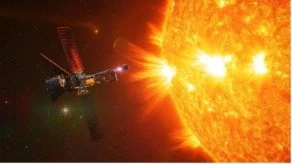
Image by StockCake
After the gravity assist breaking around the system’s larger star, truly terrifying until the very end when you’re able to breathe again, the Explorer falls into that nice orbit around Kepler 47c.
With 40 minutes until rendezvous with the Pisces, and Adis in the pilot’s seat doing the important stuff, you review messages and eat - still recovering from the 3-month cryogenic nap. Which isn’t terrible anymore but not great either.
Min’s messages are long. Passionate. Optimistic. And all you can think of while listening to her describe her observations of their evolving cognitive abilities is how you wish you could share in that optimism. And that they had sent someone else for this.
Now with the Pisces above you and Adis navigating the Explorer up into the orbital lab’s docking collar, you look out at the planet – which is now more Venus than Earth-like with 6 active volcanoes turning the atmosphere into a sulphuric haze.
Three years. The icecap at the north pole has grown 11% dropping it down to 48 degrees. That’s the North American Ohio valley and central Europe on Earth. Food supply dwindling. Lack of sunlight and dropping temps. You wonder how they’re holding on at all.
And why at least one won’t look south and draw up an image of the tropical latitudes where they might stand a chance.
Now locked in place, you watch the upper hatch open. There to greet you is your oldest friend in space. Jo Alba. A legend in the agency and one super guy who has spent more of his life away from Earth than on it.
He’s warm with a big smile and happy to see you.
Ten minutes later he’s leading you and Adis through the station avoiding the conversation about what’s ahead for you – the bout that’s sure to come, and how glad he is it’s you and not him about to order Min to pack it up and get on board for the long trip home.
After passing through the experiment modules, you climb down through an access into the Apollo, the station’s CM and strap into seats.
Like habit, you grab a keyboard, spin a monitor and begin opening windows to station status; charts, graphs and repair logs from the constant meteorite hits. The debris field here with the two stars and three planets is chaotic. An astrophysical nightmare that almost killed the mission during planning.
“Anxious for home Jo?”
“Some of us are.”
You shoot him a look then continue with your search wondering how the hell this thing is still here. “Not giving up on them is she.”
He shakes his head then puts his eyes out at the planet. “The average temperature is down to 10 C. It’s hard to watch.”
After a breath, you close out and turn to your pal. “Ready?”
“Are you?”
You unbuckle, give a nod to Adis and lift from Command and start for the hatch. “Stay tuned. I’ll radio for help if I need it.”
Leaving Jo in the CM, you and Adis head back through the modules into the Airlock. Once there, you climb into a Delta II lander ready for your trip down to the base camp you built with the engineers after the two-year construction project of the orbital lab.
That was ten years after the Adolphus and three other tribes were identified by an autonomous probe. Plodding away – evolving on a planet being pulled apart by the constantly changing gravitational tug from a pair of suns spinning around each other in 7.45-day cycles.
One of the first circumbinary systems ever discovered with the gravity shifts turning the planet’s interior into literal hell – with oceans of magma gushing out onto its surface.
A dream for space scientists – with or without the hominids.
THE SILENT IMAGES OF SAFETY: OFTEN LEAD US INTO DARKNESS
“When beggars die, there are no comets seen; the heavens themselves blaze forth the death of princes.” (William Shakespeare – Julius Caesar)
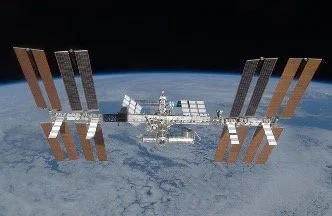
Moments after release, with the station moving towards the horizon, you see a flash from the inside booster on the Explorer. At first you think it’s trying to light. But that fades when it explodes out and downward slamming the ship up into the station.
Sparks and debris – a massive fire ball spreading out into space. Then another explosion from the Explorer rips it away from the H-frame lab. More debris. Gasses and the lab’s interior are gushing out in violent blasts of white sparks and flame.
Then the Explorer’s other booster goes. The explosion ripping the ship away from the station. The Pisces now in a spin spewing gas and the bulk of its interior into space.
You return to the Com and open a channel. “Pisces! Pisces! Jo!” With the explosions continuous, you keep trying. “Pisces, this is Delta II. Jo, this is Matt!”
Still managing the planetary entry, Adis glances over. “Abort our descent?”
You churn that over for a minute then look up. “We abort, that exhausts our fuel. We won’t be able to make it back to the surface.”
For a long moment you stare at each other – considering just what that means. If you do abort and try to return, there’s little chance you’ll dock. Not with the spinning, rapidly disintegrating station. Even if you did – and were able to save Jo, then what.
The three of you would be stuck in orbit for months waiting for a rescue – with rations for days.
No words are necessary. Adis returns to navigating the lander – operating his re-entry programs while you go back to communications trying to get through to a guy you’ve known most of your life. While watching the station you built and your flight home exploding in fierce orange and white bursts.
Entering the atmosphere, with the catastrophe above fading, you look out at the planet – now your home for the next three possibly six months. Likely longer.
Lieutenant Adis looks over at you. “That base camp you built. Well-provisioned I’ll bet.”
You nod. “Yep.”
“For four?”
“Two. For three maybe four weeks.”
He holds the eye contact while digesting confirmation of something he’d assumed. “Right.”
You return to your screen and open a channel to Min. The conversation you were preparing for in your sleep will be different from what you’d envisioned.
You came here to force her to abandon a group of hominids she’s grown to think of as family. At gunpoint if necessary. Leave them to face their climate shift and probable extinction.
How odd and oddly ironic. Suddenly, you’re on your way down to join them.
OUR BIRTHRIGHT: TO PUSH BEYOND IMPOSSIBLE DREAMS
“I had ambition not only to go farther than any man had ever been before, but as far as it was possible for a man to go.” (James Cook)

Image by StockCake
After radioing Min and giving her the news, both the sad and the disturbing, you sit back to think. Losing someone is brutal. In space, a realm we like the ancients declared sacred even more so. And Jo was a prince.
But there’s suddenly more worry on your plate. And this brings up things like purpose, potential benefit for science and humankind and what you’re doing out here anyway.
Marco Polo wrote: “My only fear is that I might awaken in my bed, destined for a common life once again.” Is that it? Is exploration, even science driven by fear of being common? That’s profound but also scary. You’ve always thought it was curiosity and imagination. Even necessity. And a driving need to satisfy them all.
You were the kid who wanted to go touch the stars – measure and see what they’re made of not just look at them. And exoplanets? Your dream career. Solar system formation. Composition. Orbital distances. Rotation – axial tilt – atmosphere and geology.
Not fear. It’s play. Out here? A never-ending playground for grown-up kids. With spaceships and landers and rovers and the coolest equipment most people never get their hands on.
And learning new things, answering questions, adding something to that science database we’ve been keeping since Thales and Pythagoras. Satisfying that curiosity that somehow hasn’t started in the creatures you’re about to go say hello to after three years.
Or has it.
Now landing in the depression 15 kilometres south of the base camp, you’re heading into an interesting situation.
Your position and that of the science committee is that we’re out here to study – not influence. And this is the disagreement between you and your astrobiologist wife – who would scoop them up and drop them at the equator in a minute.
You, a serious hardliner – meaning a staunch Darwinian, often echo Darwin who wrote: “It’s not the strongest of the species that survives, nor the most intelligent, it’s the one most adaptable to change.” But you? You often take it further saying those able to adapt and survive should survive. The others shouldn’t.
But suddenly you’re not so sure.
HOW OPEN ARE WE: TO THE RULES OF ADAPTATION
“Were all stars to disappear or die, I should learn to look at an empty sky.” (WH Auden – The More Loving One)
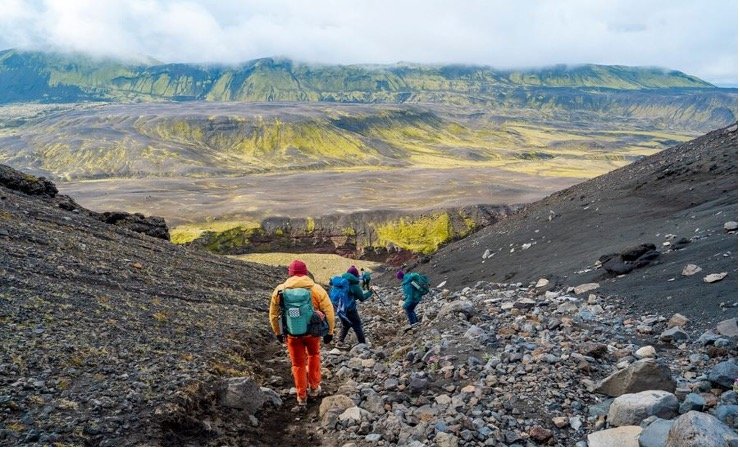
Image by StockCake
Leaving the Delta II, you greet Min and Eri Kenner there waiting. But it’s hardly the reunion you were anticipating.
After describing what you saw from the lander, you share the news about Jo, and how you never reached him. That he died where and how he always said he would. Alone with the stars to keep him company.
With the emergency rations from both landers and everything else you can carry that may help with what’s ahead, you start for the camp – ready, at least in theory for the questions.
“You sent a distress through EPAC?”
“From the Lander.”
“How long?”
“The message? Days. Another Explorer… three maybe six months.”
Min stops ahead on the trail and turns. “Rather optimistic, wouldn’t you say Matt?”
There’s really no need to respond here. Historically, you’ve done better with silence. She’s right, though, but you’ve already had enough gloom for one day.
Down the final rise to the camp, you notice the changes. A stretched canopy between the twin habitats. Essentially off-world mobile homes. Wind breaks along the north and west. And Min’s moved her office outside.
One addition that gets your attention; also gets you thinking is the vegetable garden they have going bordered on three sides with reflective panels. You had a little garden during your time here. Experimented and logged what would and would not grow. Had modest successes. Lots of losses.
But Min and Eri have taken things up a notch.
After stowing away the gear – and avoiding the conversation about how the four of you are going to survive for what may likely be a year, you head east to say hello to the Adolphus, who are doing the same thing you are. Contemplating their survival.
Moonwatcher, the tribe’s elder who you named after the man ape character in Arthur C Clarke’s 2001: A Space Odyssey, looks gaunt – frail. Weaker – older, but still proud. And with him pulling at you, cuffing you on the head like you’re his adolescent teen; you’re certain he remembers. As well as if not better than you.
The many hours you spent together. Often just sitting outside their lava tube – watching the suns cross the sky. But never allowing you inside. It was out of bounds for you and the others. And you respected that, but it always made you wonder.
THE PATH TO SURVIVAL: IS LONG AND PITTED WITH EXTINCTIONS
“Not I, not I, but the wind that blows through me. A fine wind is blowing the new direction of time.” (DH Lawrence)
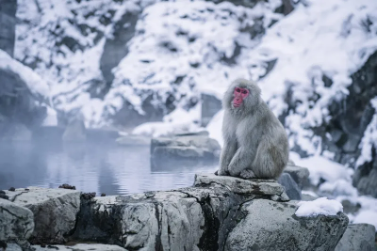
Image by StockCake
Days came. Then weeks and months. And with them came colder weather and snow. What never did come was a rescue or even a message from Earth.
Lieutenant Adis had said he believed it was a fault in the EPAC system of teleportation satellites. Instantaneous data transporters – satellite relays planted like space buoys at light year intervals during the early days when the Kepler 47 system was first surveyed.
It was hard accepting this was it for you. That your journeys had come to an end. No longer an explorer of many worlds but a survivor on one. And for that journey, everyone became a gardener. And learned to love the indigenous berry-fruit that mostly sustained the Adolphus. Which they shared graciously.
After nine months in the depth of a bitter winter, you abandoned your position about interference in their evolution. They were dying.
It was time for them to venture south. They were heading into extinction right here with the glaciers closing in. If they hadn’t evolved enough to picture it in their minds and feel driven by those images to move, their only chance was for you to picture it for them.
But you’d overlooked something. Their determination to stay where they felt safe. Which left you with few options.
Tranquilising the remaining 16, scooping them up in nets suspended from the landers would have been great if you had the nets and the drugs. And if you hadn’t used the Landers’ fuel cells to heat and power the habitats during the coldest part of the winter.
So, you farmed more, built more raised beds and solar graduators for your crops, and watched more of them die and each other get weaker and sicker on a vegetable and berry diet devoid of all proteins.
After the 18th month, just under three Earth years, you buried Doctor Kenner. A passionate scientist you played chess with and learned to love. Two months later Lieutenant Adis.
It was sad and hard, but not nearly as sad and hard as it was that cold Tuesday when you buried Min who challenged you always – and was often harsh. But had softened near the end and admitted she was afraid.
It was then you decided to leave the Adolphus – not stay and die with them.
It was possibly the saddest moment, especially when saying goodbye to Moonwatcher, certain he was trying to urge you not to leave. Like a father who hadn’t yet mastered the art of emotion telling you he loved you too much to watch you go.
Or was he cautioning you. Sharing his fear of the unknown. He just wasn’t there yet. Not ready to venture out to survive.
Darwin, you old bastard. You had it right after all.
DARWIN OR GOD: WHO COMMANDED MY GENES TO END HERE
“I feel the silence waiting to take them all up again in its vast completeness, enfolding the sound of men.” (DH Lawrence – Silence)
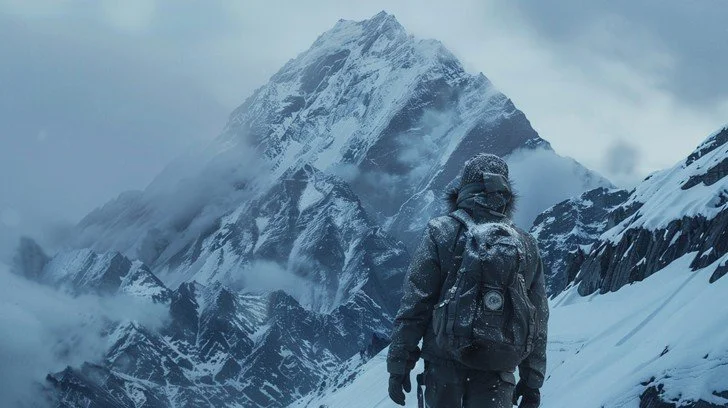
Image by StockCake
Two days, about 30 kilometres south of the base camp, you’re climbing. A steady rise to a high plateau you had no idea was there. Never recorded during the planetary surveys. Couldn’t see it from space or the landers. Steadily dropping temperatures, more snow and chaotic winds. Bitter cold burning in your lungs.
By the 3rd day you’re scaling a cliff face beyond the frozen plateau trying to make a crater that looks a day away when you slip. Down hard on a ledge 10 metres below, fracturing your leg and at least a few ribs.
For a time, you lie there. Not wanting to feel like you’ve given up but finding comfort somehow in the cold. Which is numbing you like an anaesthetic. Even your mind is starting to drift. It’s like you’re floating – getting that last shot of dopamine telling you you did well. It was a good try. Rest now.
Staring across the valley of white snow at the suns and 47d a crescent above the horizon, you become aware - the pain is now gone. The cold has become peace.
You lay your head back against the cliff – not afraid like Min was. Not even curious about what’s next ahead. Just acceptance. You made it to the stars. Added what you could to our knowledge of what’s out there. And now like Min and the others, you’ll die on an alien planet. Where no one will ever know.
Your eyes start to close. You don’t want them to, you’d rather savour this moment, but they’ve disregarded you. And you feel like you’re lifting away from the ledge – heading into space.
“Don’t! You’re not dying here!”
You snap open your eyes and smile at Min standing there over you. Angry as hell that you’re giving up. “You know Min. I learned long ago never to contradict you. Paying for that mistake was always such a bummer. But this time, I think I’m going to have to disagree.”
After a laugh, the only one here to find you funny, lying fully covered in snow you watch her dissolve. Ah hell. What can you expect from hallucinations these days. And that brings on more laughter. Laughter at you – finding humour at the close.
But then something strange. No longer sure of what’s real – unable to feel, you see a figure scaling the ledge below you.
Assuming another hallucination, you shake your head – ready for a follow-up round with Min, but then you hear Moonwatcher. His familiar grunt as he closes in.
“I’ll be damned.”
Like a father, without words, he grabs your arm and picks you up - tosses you over his shoulder like a sack of potatoes and starts down the trail – heading back to their lava tube. Taking you home to safety.
And all the way back, bouncing on his shoulder, the obviousness. And absurdity of your expert conclusions about their evolution. He knew. Saw it, somehow. Where… and exactly what you were heading into.
Mark Thomas