Intelligence: Far Greater Than Our Own
by Mark Thomas
Staff Writer
THE KNOWLEDGE YOU BELIEVE: YOU HOLD ALONE
“Real Knowledge is to know the extent of one’s ignorance.” (Confucius)
4.6 billion years in orbit. Undetected, somehow maintaining its orbital velocity and altitude above Earth’s surface for those billions of years. And would have remained there, unseen perhaps for another 4 billion if it hadn’t landed inside the ISS’s Zarya module 64 minutes after the Falcon 9 lifted the station to a higher orbit.
It’s difficult to fathom what we’re facing as a culture and individually. And for you as ambassador to the UN of the most powerful nation, the nation in possession of the 3-kilogram device from another world, a different kind of challenge.
You’re tasked with informing our world’s leaders, that a probe of unknown origin was placed into orbit around our planet when our solar system was just forming from a protoplanetary disc. A mere blob of hydrogen and helium just beginning to rotate.
Without mountains, forests, deserts or oceans – the features of our rocky world. But giving away enough to someone or something that there would be life here one day. A worthy project for study in astrophysics, astrobiology, planetary sciences, evolution.
But these are just theories. Logical suppositions. The truth is, we don’t know. Whatever its purpose, its entire purpose, it’s evidence of vastly superior life out there. Intelligence with technologies far greater than our own.
But informing them of what it has locked away inside is more than profound. It’s baffling. A moment in your career you could never have anticipated.
For you, standing in your New York office staring thoughtfully out the window – after reading the classified report on the probe’s composition – and the conclusions by the science team, your problems are extending far away from the astrophysics or even the technology of an advanced species out there studying us. From a time before we began.
Psychology. Sociology. Philosophy. Politics. Religion. 4.6 billion years in orbit recording everything. Answering all those questions from the geological formation of our world to the evolution of our species. A feast for planetary scientists, geologists, astrophysicists, historians and evolutionary biologists.
But there’s more. With infinite storage capacity inside some molecular electronic gel – speculatively visual and audio of every event, every sound, every grunt, squeal, chirp and human conversation – and certainly every electronic communication from our technological age, that probe is a ticking bomb.
Or a Pandora’s Box.
INFORMATION TECHNOLOGY: THE TRUE POSSESSION OF POWER
“Information is as much a weapon as a sword.” (GR Matthews)

Image by StockCake
The day before you’re scheduled meeting at the UN, you decide to see this device from another world and speak with the research team. Your questions are many. Some of which you’ll need answers to tomorrow when addressing the security council.
Now standing there in the Space Administration’s lab looking at what they’ve labelled the Ice Cube – a two metre by two metre square of EM resistant glass three metres tall, you’re taken aback.
The Ice Cube is a matte black crystal container – without a glimmer of the profound mystery [the alien orb] inside. On opposite sides are glass desks lined with monitors – behind which sit members of the science team.
The room – 2x the size of a football pitch, is buzzing with masonry drills. Far into the distance in all directions, servers in long rows to the four-metre ceiling are being installed. Blue strip lights line the corridors leading to the Cube. It looks like a server facility you’d expect to find in the basement of an AI data centre.
Dania Clarke, the agency computer scientist in charge who walked you in from the elevator, notes your confusion and points to the desks on the right.
“You want to see it?”
Unable to pull your eyes away from that black absence, standing there in the middle of this eerily lit technological cavern, you nod and slowly start over. “Not even light?”
“The glass is impervious to all wavelengths of electromagnetism. Radio, microwaves. X-rays, Gamma – Infrared, UV and visible light. There are cameras inside. It’s lit with monochromatic spots from the ceiling and corners.”
“Reason?”
“In case it’s communicating. If it’s sending out some emergency distress signal, we’d rather not…”
“…invite the repair team. Right.” You turn at the sound of another masonry drill. “And the server farm?”
She follows your eyes back and scans the vast room that literally disappears in every direction.
“Over 2 million square feet. We’ve estimated from our scans the capacity is in the range of 900 billion compressed zettabytes. We do find a way to start downloading it, we’ll need five, six – maybe 10 times the storage you see here.”
“Christ.” You shake your head in wonder. Trying to imagine a civilisation with that kind of technology – molecular electronic storage gel – when our solar system was a swirling disc of mostly hydrogen gas.
At the desks, you acknowledge the science team then stare into a trio of curved monitors. The probe, displayed on all three, is like a reflectionless sphere the size of a basketball, perfectly smooth, sitting in the middle on a glass rod lit by pinpoint spotlights from the walls and above.
It’s eerie and strangely captivating. The purple lights casting an odd glow inside the cube but disappearing – being fully absorbed at the probe’s surface. “An extraterrestrial intelligence. In orbit watching us. From the very beginning.”
You turn to Dania… who gives you a smile having already considered the possibility that… it’s alive and still performing its function. Studying us – at this very moment.
ADJUSTING BEHAVIOUR: THE PSYCHOLOGY OF SURVEILLANCE
“You had to live from habit that became instinct – in the assumption that every sound you made was overheard and except in darkness, every movement scrutinised.” (George Orwell – 1984)
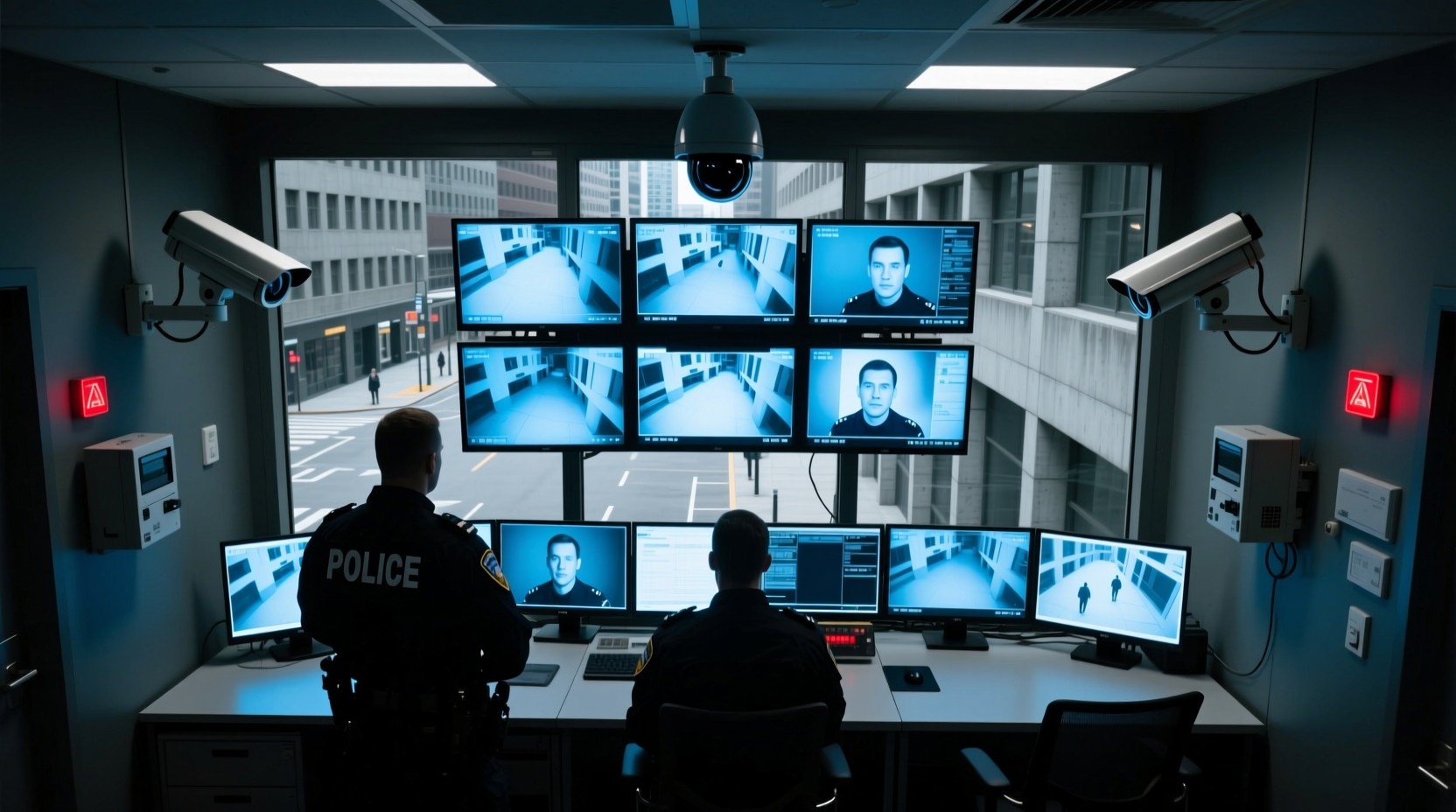
Image by StockCake
In 1786, Jeremy Bentham introduced a circular prison he called the Panopticon – designed for constant and uncertain surveillance to control prisoner behaviour. Though inmates would know constant surveillance of all would be improbable, they’d be forced to assume at any given moment they were being watched. And adjust their behaviour accordingly.
in his novel 1984, George Orwell wrote: “Private life came to an end.” He portrayed surveillance as a tool of absolute control to suppress dissent. Illustrating how constant surveillance eliminates privacy, dehumanises individuals and creates a society where citizens, believing they are always being watched, are forced into conformity – surrendering autonomy.
The rationale used by proponents of mass surveillance today suggest the uncertainty [of surveillance] encourages self-discipline.
Those against [the surveillance state] typically quote the psychiatrists who say: constant surveillance creates heightened anxiety and stress – a feeling of vulnerability and psychological discomfort. Paranoia – feeling scrutinised, limiting their autonomy and hindering their self-expression.
Just standing there with your eyes on those monitors – and that soft purple hue inside the Cube – with the probe – featureless and innocuous, like a god-like orb, you can’t help but wonder about its creators. What the entirety of their interests were. Just for the science? Or something more.
HG Wells started his War of the Worlds with: “No one would have believed in the last years of the nineteenth century that his world was being watched keenly and closely by intelligences greater than his own.”
There’s so much to consider with that prescient line. Who is that greater intelligence? Are they still watching? If no longer from the probe held captive here, from another or others still out there in orbit? Watching, listening and recording every word, deed and misdeed?
Louis L’Amour said: “Knowledge was meant to be shared.” There will be some – the leaders you’ll tell tomorrow, who will see this as a threat. Just from the sharing. Others will have different interests. Exploitation – strategic advantage. Control. They’ll want it. Or they’ll want it destroyed.
What an evil demon. What a powerful discovery.
After giving Dania a nod, you start through the server canyons imagining tomorrow – and the room full of poker faces. And the nightmarish drama this is going to unleash.
KNOWLEDGE IS POWER: KNOWLEDGE WEAPONISED IS CONTROL
“The greatest enemy of knowledge is not ignorance; it is the illusion of knowledge.” (Stephen Hawking)

Image by StockCake
On the way back from the agency, you stop at Columbia to speak with a colleague. A psychologist for whom you’ve arranged clearance knowing you’d be calling on her for advice.
Robert Noyce said “Knowledge is power. Knowledge shared is power multiplied.” What you have to deliver to the world’s leaders is knowledge of power raised to the power of 100. You understand more by the minute why the government took control of this and classified it. Allocated enough money to create a data centre rivalling the Citadel Campus in Nevada.
But the why question: why they’re having you deliver this at all, is still plaguing you. Why share something this important? If the information locked inside is what they believe it is, what they’re hoping it is, and it’s ultimately accessible to them, the power, to whomever unlocks it will be nearly absolute.
All the secrets – everyone’s secrets. The End of Days for the spy agencies. All spy agencies… And the companies that create and manufacture the tools for the spy agencies. And isn’t that a thought.
“This is real.”
Sitting in Jan’s office watching her read the report, you’re amused by her reaction and her question. Though practical jokes aren’t beyond you, a ruse like this would be quite an effort.
“The monitoring mechanism is in the outer shell. About two and a half millimetres thick. The storage gel inside is a type of molecular species using something called photochromism. Every molecule becomes a bit giving it almost infinite capacity.”
“For over four billion years?!”
“Every sound, every sight, every event. Everywhere. Without cameras or video equipment. It uses electromagnetic fields. From inside buildings – under the ground… hell, to the very core of the Earth. And don’t ask how, because I don’t know and neither do they.”
She finishes with the report, drops into a chair and looks at you from across her desk.
You have so much trust in her judgement. And you know exactly what those wise eyes are saying. That we’re not ready. That people have come to accept their emails and text messages may not be private. That conditioning is well underway. The same with the ubiquity of cameras – in the workplace, in stores and on the street.
Many assume they’re being listened to through the microphones in their phones and computers. That information is widely available – ostensibly so your search engine can better direct you. But this is more than that. This is…
“…an unmasking Mike. Of everyone dead and alive. Dirty politicians – back room deals. And how about our beliefs? 60% of the world believes in some flavour of creation. They’re going to love hearing the scientists have it right. Assuming they do. Add to that border disputes. Whose people were here first – who really owns the rights to this or that land.
“Then mention all the ugly things our cherished institutions did along the way. Reading about the inquisitions is one thing. This… ” She breathes out and shakes her head. “And there’s something else… something about…?”
“…their motivation for releasing it.”
Now she looks you in the eyes – and nods. And for the moment, there isn’t much more to say.
In the car on the way home, you sit in the back in a deep state. Puzzled – certainly unsure of what our world will look like and go through when this comes out. And it will come out.
Who has the data on everyone. Which government will feel secure knowing the other team has their secrets – all their secrets. And plans for new things they were hoping to keep secret.
And then personal issues. All those who’ve cheated on their taxes or their wives or husbands. Or lied to the press when they said they didn’t know about this or that. Bribes and other types of political persuasion.
Now at dinner with your wife, you do your best. But she knows. And she also knows not to pursue it. You have the world and our collective sanity on your plate. And a balancing act. And a part in something that’s conceivably beyond anyone.
MORE VALUABLE THAN INTELLIGENCE: IS KNOWING WHO KNOWS
“The purpose of knowledge is action not knowledge.” (Aristotle)
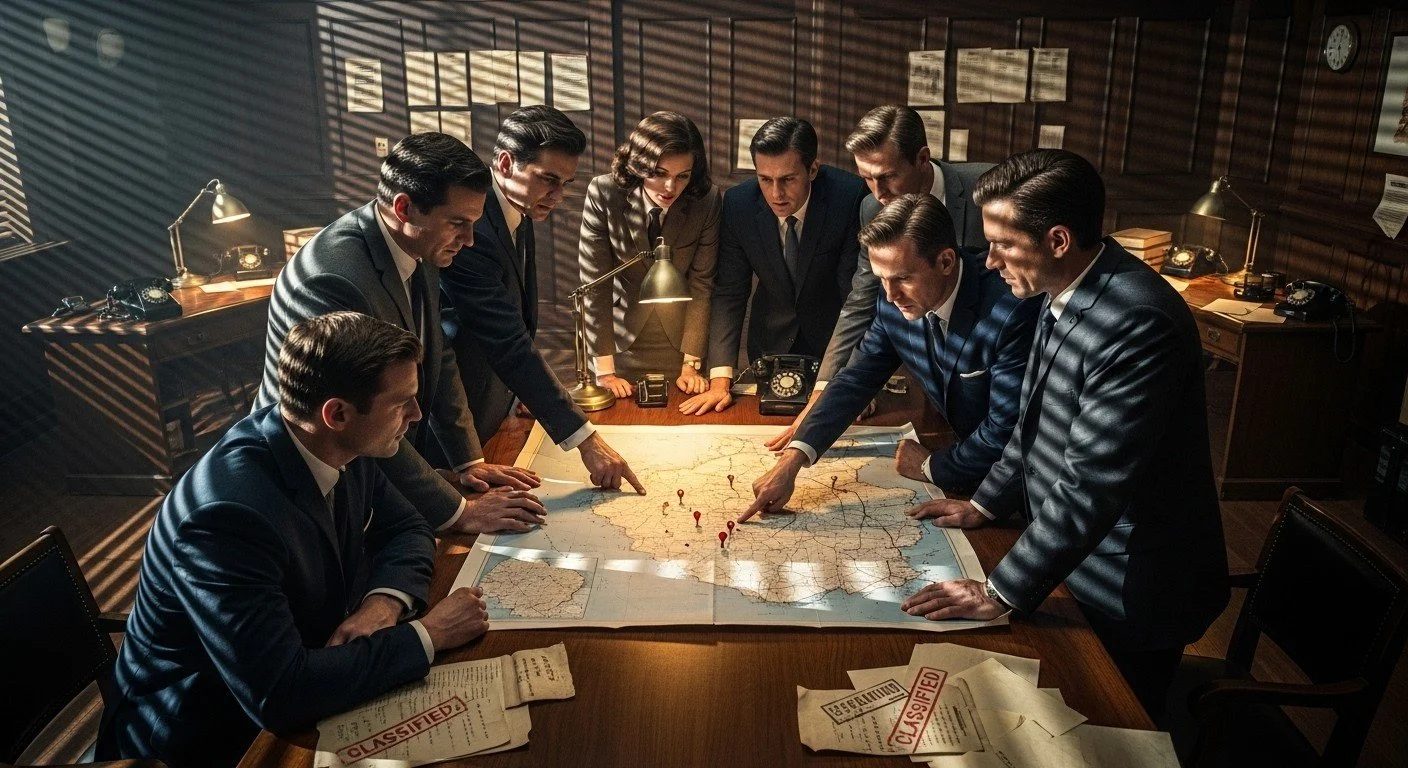
Image by StockCake
Throughout history, we’ve played an often-dangerous game with our adversaries and allies. Hinting at things we know or don’t know or denying the things we do. Information – intelligence – knowledge about the other side’s weapons or plans.
It’s a never-ending game we study and write books on – cherishing and improving our skills. We’re inured. Natural selection saw to it the gamblers – the adventurous gamblers adapt and survive.
Michael Porter once said: “The essence of strategy is choosing what not to do.” And looking forward to your morning, you can’t suppress the odd feeling that what you’re set to deliver is something more than knowledge of an alien culture and a device they left for study and perhaps more.
We live in a complex world where the true purpose of the tasks we’re given are not always obvious. Often obscured. Kept from you for reasons. Pulling you into that same strategy game.
What is the purpose in this? What message – what threat – what leverage will our side gain? Or is it something else? Something deeper – an angle you’ve ignored.
Turning over now in bed, you picture their faces, gauging their reactions, gauging their concerns. You’ll know more tomorrow. Perhaps a rested mind will offer more.
KNOW YOUR ADVERSARIES: AND YOUR ALLIES MORE
“All warfare is based on deception.” (Sun Tzu)

Image by StockCake
You’re facing the president after returning from the UN special meeting. Which was conceivably the most illuminating moment in your career in politics and as ambassador – who was just a little slow this time out of the gate.
You’re wondering if she’d asked you to go there as a spy or a participant in some high-stakes poker tournament – to study their reactions – to determine from their reactions which of them already knew about the probes – and which of them had one… would you have agreed?
And could you have gone without giving away why you were sent? That one’s a bit more difficult and provides justification for her having asked you – while keeping you in the dark.
You were unaware of your part in making this a stand-off and stand down as “We have one too” until you noted the look on the Chinese ambassador’s face. When he glanced at the Russian ambassador – with neither blinking or returning a word.
At that moment, it all became clear. As Morpheus put it to Neo in the Matrix: “Welcome to the desert of the real.” They knew. God bless them everyone, they knew. And more than that, they knew why you were there – and were fully prepared.
And now, after having done your duty – a dedicated servant, you look at your Commander in Chief who poses her veiled question yet again.
“And you noticed nothing strange or guarded about their reactions?”
You think for a moment as if replaying the meeting in your mind. As if you’re unaware of what she’s asking. Then, after a long thoughtful memory dip, you lift your eyes and look into hers. “I’m not sure what you’re after Barb. They looked thoughtful, certainly, perhaps concerned, but… No. Nothing strange at all.”
For nearly a minute she stares you in the eyes – probing. Once again – you’re at the table in Vegas, holding Aces over Kings - but showing a busted straight.
“Well… All right. We’ll see what they come back with tomorrow.”
“Sure.”
She looks down and starts flipping through the report. “Stop by in the morning. I’ll want you in on the strategy meeting.”
“Sure, Barb.” You stand slowly… turn and start for the door. Satisfied – no longer wondering what tomorrow will bring.
Mark Thomas (TE Mark)
StorytellingScience