Quantum Realities: From Emergent Gravity, Space, Matter and Time

by Mark Thomas
Staff Writer
CONTROLLING PROGRESS: AND ADVANCES IN SCIENCE & TECHNOLOGY
“Technology makes it possible for people to gain control over everything, except over technology.” (John Tudor)
With the helicopter clearing the Annapurna summit, you look up from your notes and stare out at Pragati - a minimalist estate set in a ring of white-capped mountains high in the Himalayas 200 km north of a city you’re not allowed to write, speak or even think about.
Each time you come here; you’re struck by its presence in this surreal remoteness. It’s vast and modern with entire wings stretching away like receding boulevards in some city. Not a town, building or road in sight. Helicopters on rooftop pads at the estate’s north, south and west are the only way in or out.
Perhaps even more it’s knowing what’s inside and what’s being done inside that moves you. Perhaps it’s knowing that besides you maybe 150 people worldwide know it exists.
Soon you’ll be given what you need to complete your mission. With an understanding you’re to accept without question there’s a purpose for what you’re given, what you’re shown and what you’re not.
And a further understanding that you never question or seek information on Pragati: when it was formed, who those 150 are or what unique innovations were developed there first – before they were allowed to be developed first again in the real world.
Now landing on the south helipad, you’re asking yourself; which invention – which imaginative leap did someone make that was deemed too soon – too harmful for the world of 2025?
And what will be asked of you? A man who believes someone should be governing our inventiveness. God knows we are a clever lot. Get inside some tech firm and sabotage experimental research? Arrange an accident for someone days or months away from a breakthrough? Bring the company down altogether?
Your talents are unrivalled. And your commitment here unshakeable. And yet just like last time and the time before, you know this is coming to an end for you. You’ve begun questioning when you know you shouldn’t.
QUANTUM GRAVITY: REEVALUATING EINSTEIN AND SPACETIME
“If quantum mechanics hasn’t profoundly shocked you, you haven’t understood it yet.” (Niels Bohr)

Image by StockCake
After meeting with the administrator and following her through endless corridors, you’re in 3.R of the east wing staring through the glass at a model train.
A little fancier than the one you had in the basement when you were 10 – but yours probably cost a few billion less and ran on those old fashion things they called tracks.
Can’t really blame dad though. He was just your average mechanical engineer. A good head for science. Just not the guy who would consider something as nutty as…
“…Anti-gravity?”
You watch the train float above a shiny cylinder – gliding through a course a kid would go nuts for. It’s as big as a football field with mountains, trees, towns with rail stations. Parking lots and crossings. Certainly nothing Santa’s getting down someone’s chimney in a week.
Just watching it glide, smoothly – effortlessly you can’t help but wonder if this would have been enough to excite that 10-year-old you – when few things could.
“The technology is called Gravlev.”
Pulling your eyes from the model, you glance at the scientist who’s punching in commands on a panel etched into the glass.
“The cylinder it rides on houses spinning superconductors that create a gravitomagnetic field. It’s the gravitational equivalent of electromagnetism.”
Your eyes widen certain from his casual tone you missed something. “You’re kidding.” You turn again to watch the train sweeping a turn at the far end.
“No. And yes to your question. We’ve solved what theoretical physicists worldwide dream of solving.” He turns back to the glass and gazes proudly at his creation. “Gravity is an emergent feature from quantum processes. Like temperature from colliding gas particles… or consciousness from neurons in the brain. And this… this is a step on our way to rewriting physics.”
Though no scientist, you’re aware this is more than a next-generation phone or LLM. It’s what the clever chap said it was. A rewrite of the standard model of particle physics.
Einstein’s Theory of Everything uniting the macro world of electromagnetism with the micro world of quantum mechanics. And there’s more in that than future spec Gravlev trains.
Avoiding for the moment the more esoteric results: 4-dimensional reality, emergent gravity, space, matter and time – you begin picturing the immediate applications.
Cars – planes – rockets – satellites and machinery. Space exploration. And the industries that will or will no longer exist. And the stock markets crashing – booming or both.
With your mind fighting its way back into those more mind-bending concepts, you manage a thank you for the demo, then turn to Allison and give her a nod letting her know you’re ready to walk and to hear the rest.
UNITING GRAVITY AND QUANTUM THEORY
“Combining gravity and quantum theory into a unified framework is one of the central goals of modern theoretical physics.” (Dr Mikko Partanen)
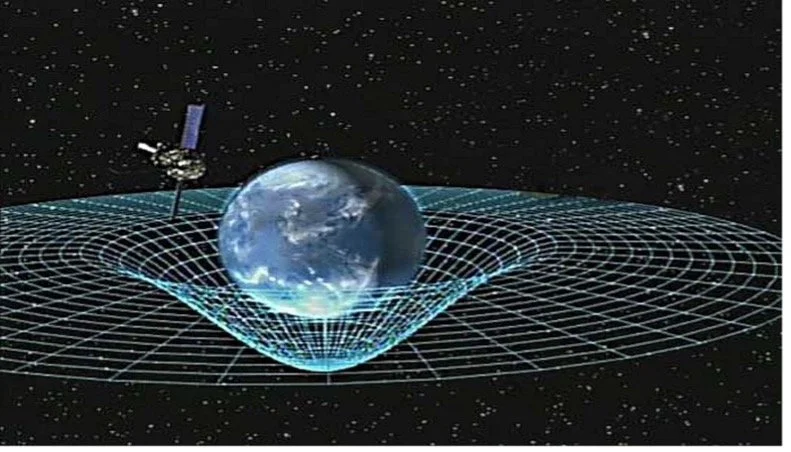
Image by StockCake
Gravity exists because objects with mass or energy warp the fabric of spacetime around them. The curvature dictates how objects move.
That’s textbook. That’s Einstein’s General Relativity.
Quantum theory, however, is probabilistic. It doesn’t predict absolute results of an event, only the likelihood of them happening. It challenges the classical version of a deterministic universe.
A dropped cup falling to the ground - tomorrow following today, or the past, present and future all equally real and coexisting in a 4-dimensional reality – there’s no questioning how weird quantum mechanics is.
And with a provable theory of quantum gravity, we’d be doing more than weighing the probabilities of a cup hitting the ground when you drop it – we’d be debating whether the cup exists. Or whether it exists the same for each of us.
Now in Allison’s office trying to save the philosophical thought experiments for the trip home, you open the file she handed you on your way over and begin reading.
“So… having decided the world isn’t ready for quantum gravity, who out there is getting close?” Expecting to find a corporate or government scientist, someone working in a well-funded lab, you open to a picture of a kid who looks 17. Average build. Shaggy – glasses. Kind of looks like you after high school.
“He’s Josh Hoffmann. A grad student at King’s.”
You flip the page. “Seriously.”
She nods and watches you read - looking for more. Who he’s working with. Things you’ll need if you’re going to isolate him, sabotage his work or make it or him disappear.
When looking through his early education, you find the part she was waiting patiently for you to find.
It’s an evaluation from the West London Autism Institute where he spent six years before going directly into the graduate programme at King’s College - a joint major in physics and mathematics.
“He started working on Quantum Optics with Professor Adele Ferris, a theoretical physicist who started there the same year. Within a few months, she redirected him to Quantum Gravity.”
You begin putting things together. Pragati’s concern and why you’re here. “He’s there – not just close. Vulnerable and a valuable prize to whoever gets him.”
Allison stands, walks around her desk and sits on the edge. “I won’t advise you how to proceed, Daryl. I will tell you this. In 2025, nearly all scenarios are bad should he end up in someone’s hands. Good guys or bad.”
Realising the mission you’ve been handed; you close the file and stand. “Expenses?”
“Sent an hour ago.”
Still sorting the details, you turn and head for the door but stop when you grab the knob. “The autism. His progress.” You turn. “It’d be interesting, wouldn’t it? if they were related?”
“I’m not sure I understand. What are you suggesting?”
You look her in the eyes thinking back to the demonstration – the scientist telling you they were close but with further steps ahead. And remembering her reaction when you said the kid was already there. Which was no reaction.
“I’ll keep you posted.”
“Good luck.”
QUANTUM AND SUBJECTIVE: THE RELATIVITY OF REALITY
“Reality exists in the human mind, and nowhere else.” (George Orwell)
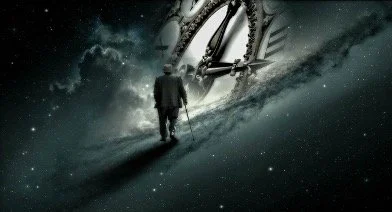
Image by StockCake
Imagining reality with quantum gravity would be conceptualising a universe where our understanding of space, time and matter is fundamentally changed.
Time as we perceive it flowing smoothly along with space might not exist as a fundamental dimension. It may be an emergent property of quantum processes leading to a Block Universe with past, present and future equally real and co-existing in a 4-dimensional reality.
Going over your research on a bench in the icy quad waiting for your neurodivergent prodigy to appear, you’re finding the emergent migraine nearly as disturbing as conceptualising time as something that emerges.
Objects may not have objective reality. They may only be determined or perceived by relationships to other objects or by a specific observer.
Specific observer. Like subjective realities.
After reviewing your notes on this young man who lives in his room, books and the university lab driven to solve the biggest puzzle in physics, you close your binder and look up. And there he is, heading into the Applied Sciences building.
All missions are complex. And because of the nature of the work, usually new tech, there’s the needed research to bring you up to speed. But this one is different – posing you with unique questions.
For one, you’re focussing more on the researcher than the research – with an inclination to view him as a kid in a world from which he feels isolated. With little excitement in it. Just function.
But that’s a proprietary condition – your perception. Not his which may be probabilistic. Where he perceives quantum processes and creates the world around him from probabilities rather than absolutes.
And what might that existence be like? He’s a mathematical prodigy. You’re not. How does his perception of reality differ from yours?
Heading up the steps after leaving your icy bench, you’re thinking of your prized thought experiments that have always helped you with the more arcane concepts in physics and cosmology wondering what thought experiments Josh Hoffmann’s mind can conjure.
That 4-dimensional Block Universe with the past, present and future all real; can he perceive all three? What a wrinkle in mental time travel that’d be.
And then there’s Pragati? What are their true interests in this? Stop him? Or just keep him from others.
FINDING ELUSIVE SOLUTIONS: THE ART OF IMPROVISATION
“Looking up at the stars, I know quite well that for all they care, I can go to hell.” (WH Auden)

Image by StockCake
Once inside, it doesn’t take long for you to put a reasonable scenario together for what’s really happening in this twisty thriller.
The receptionist scrutinising your ID like she knows something. Then going for her phone to get authorisation. Not from a supervisor or campus security. But from Josh’s professor – on a Sunday morning.
In the lift down to the labs, you lay out the new game board and watch the pieces fall into place. Josh is certainly working for someone, just without his knowledge. And Pragati, unaware of who, sent you in to extract him while fleshing out the sinister opportunists.
It’s almost hard to look critically on such masterful strategy.
Working your way through the labs – Robotics, Biotechnology – Mechanical and Industrial Engineering, you find Josh in the back facing a monitor at a desk piled high with books and note pads.
The big questions now are: Who are you up against? What will they do to stop you from getting him out of here with his research? And where is safety? For him and for you.
The Feds? Not a great option. Besides working for an organisation that doesn’t exist, they may be those sinister opportunists. Back to Pragati? Better, and probably what they had in mind, only, at this point you’re feeling it would have been nice if they’d asked and accepted the refusal.
Assuming that phone call to Professor Ferris also went to someone’s agency or corporate security, you have little time to hatch a plan. One that will ideally see you and Josh make it out of here alive.
You move quickly past a group working a virtual bio-tech sim and a couple of guys programming a robotic arm.
Then in behind Josh deciding to take this in steps. Get him and his work out of here and fill in the rest of that plan later – if there is one.
QUANTUM WEIRDNESS AND EXPLOITATION: NOT ALL IS AS SEEMS
“You are the call, and I am the answer. You are the wish, and I am the fulfilment.” (DH Lawrence)

Image by StockCake
“You’re with the police Daryl?”
“Something like that, Josh. Start packing; I’ll tell you what I can on our way.”
Josh is one sweetheart of a kid. And so much the vulnerable genius. With only a brief introduction, he invites you into his habitat, listens to your rushed explanation like a 21st century Isaac Newton, and without hesitating sets about packing up his work.
Copying everything to portable drives – arguing forcefully it’s better not to delete his work from the campus servers. That everyone will be better off if he leaves it. But that he absolutely must take his spiral notebooks. All 167 of them.
That he’s so willing to trust makes you wonder whether it’s his vulnerability, your persuasive abilities, or something else. Maybe something deeper and more mathematical. Taking you back to those theories about Quantum Gravity and his perception of reality.
“Hey, Josh? Who else knows about your work?”
“Just Professor Ferris.”
“For two years? And only she’s had access to your files?”
“She said it was important we keep it between us.”
“Really…”
It’s while listening to him explain his relationship with his professor, and how she told him because of the sensitivity of this research, he needed to move forward in secrecy only giving his work to her, that besides screaming alarms you hear Mr Miyagi telling Daniel: “Not all is as seems.”
“Tell me… you know there will be investments from corporations and research institutes and other universities – Maybe even a Nobel Prize. Did she ever tell you what she was planning to do with it?”
“Autism research.”
You look at him with a squint. “Autism research?”
“Did I do something wrong Daryl?” Sensing your concern, he manages to look you in the eyes. It’s distracting in a way. But not enough to derail you from seeing their plan even more clearly. Move him into university lab with a professor on the payroll – whoever they are and reap the benefits of his work.
That kind of genius is almost praiseworthy.
“No Josh. I’m sure she has the best intentions. And I think I have a way of making her plan reality. Helping kids all over the world. Maybe get each one a condo with a Ferrari out front.”
He smiles and continues to pack. Wonderfully, and admirably oblivious. Taking you back to an earlier time. When you wondered how the world looked through other’s eyes. Wishing they could see it through yours.
ABRIDGING EINSTEIN & SPACETIME: TO WORK WITH QUANTUM GRAVITY
“The winds must come from somewhere when they blow. There must be reasons why leaves decay. Time will say nothing, but I told you so.” (WH Auden)
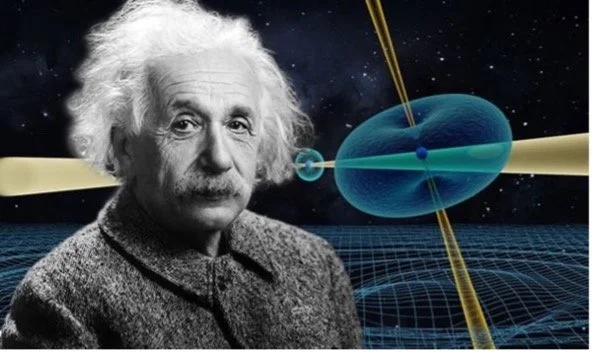
Image by StockCake
A reality with quantum gravity is a deeply counter intuitive landscape where our everyday experiences of solid objects, linear time and the way we perceive our environment may be an illusion.
Just watching Josh organise and pack his prized notebooks going through this process as if rehearsed – or perhaps already performed, you’re convinced now of why he’s so accepting you’re here as an ally.
He was expecting you. Either drawing this event in his mind as a probability map – or living it in some simultaneous future. Now living it again.
Suddenly, while strapping on his pack, he freezes and stares off as if distracted. Just looking at his face though, you can see immediately, it’s not distraction but focus. Like he’s sensing a disturbance you can’t. While plugging it into some equation.
“What is it, Josh?”
He looks up at the ceiling then back towards the lifts.
“We need to go Daryl.”
“Why? Who’s coming?”
After seeing you pull a gun from your coat, he grabs you by the arm.
“The emergency stairs.”
Certain he knows something, that the antagonists in this plot have arrived, you follow him out of his cubicle along an aisle heading for the back. At the door to the emergency stairwell, you look back at the elevator and see the doors part.
“Come on, Daryl. We’ll make it.”
Wishing you had time to ask whether it was intuition, seeing a future that may be accessible to him, or sensing a disturbance in the gravitational field that alerted him, you follow him into the stairwell.
Moments later you’re on the stairs up – then out into the lobby and through the front doors running across the quad headed for Tavistock and a taxi queue.
THE EMERGENCE OF CONSCIOUSNESS: VARIABLE AND UNIQUE
“If the eyes deceive then the brain blindly receives what the ears are twitching to hear.” (Quinn Graw)
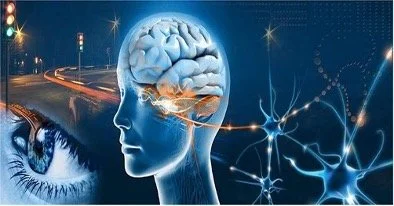
Image by StockCake
There was fiendish brilliance in what Professor Adelle Ferris and her colleagues were doing. Using an autistic kid who sees helping others like him achieve a normal life in a discriminating world more important than fame, glory, a Nobel Prize or even money.
And guiding him along the way - convincing him he was advancing his dream in a world incapable of accepting neurodivergence as just another version of normalcy?
That is ingenious.
What they missed, however, was the brilliance that was Josh, who had sensed from the beginning Professor Ferris’s true nature. Or perceived it in some non-linear timeline.
And had continually found ways to delay, often reaching dead ends while completing his work in secret - most of it with hand calcs in his many notepads. With only enough going onto the campus network to keep the fine Professor satisfied – believing they were getting closer.
“It’s useless?”
“Not useless. Just incomplete.”
“And she never questioned you? About the delays?”
“Why would she do that, Daryl?”
You smile realising how much you have in common. How you also found a way to stay a step ahead. While adjusting to a world from which you were kept because of your inability to socialise or sustain friends or even express emotion – until you were diagnosed. And given help.
How only now – after meeting Josh and gaining a better understanding of the Quantum nature of our probabilistic universe, you finally understand how you knew in advance things that were about to happen. Or anticipated things people were about to say. Or knew when people were genuine or dishonest.
The mind is a biological computer running sophisticated programmes from inputs we’re not even aware of. Computational and beyond our comprehension. Evaluating probabilities for everything. But not all running the same programmes. And not all with the same hardware.
And Josh, someone who found his way into maths and physics, just had an advantage. Where you’d assumed it was intuition – Josh applied quantum physics to his abilities to perceive what those considered normal couldn’t.
Just watching him in the cab on the way to UCL to meet Sarah, the physics major now professor you tried to impress your first year at university, you can’t help but feel an attachment.
Like there was a reason you were put together. Perhaps a quantum universe with all its complexities is deterministic. And Josh just brought us a little closer to understanding it.
QUANTUM PERFECTION: IN OUR IMPERFECT WORLD
“A pure heart open to the light, will be filled with the very essence of truth.” (Rumi)

Image by StockCake
“You have everything?”
You’re on the front steps with Sarah after a long day with Josh working together like colleagues. Gaining a new understanding of our universe, its mechanisms and being introduced to Josh Hoffmann’s Theory of Quantum Gravity.
With the winter sun dropping behind the buildings and Josh in a cab with his eyes buried in his laptop working on a suggestion of yours: Gravlev train technology – the first of those future practical innovations guaranteed to make zillions, you watch Sarah who is understandably exhausted – reading the instructions you prepared while in the lounge.
“You’re sure about this? That he doesn’t want any…”
“…he doesn’t want recognition. He doesn’t see the world that way. Or even see himself in it. Ours is a worldview I wish we could share.”
She turns a page to a list of autism research centres where most of the money will go and the details of a foundation she’s to set up through the university.
With a provision that it appoints Josh the Chief Technology Officer – with a modest salary that will award him and his family the comfort they deserve.
“But this. Putting my name on his work.”
You give her a smile. “Enjoy it. Do all the good things you were planning.”
“You’re really something, you know?”
You laugh, realising how long and what it took to finally impress her - and convince her to find you, if not educated enough to date at least entertaining.
You pull her in for a hug – both of you now watching Josh – sitting like a machine with an inexhaustible ability to work and remain focused – already drawing sketches of a Gravlev train that may conceivably put an Autism research institute in every city in the world.
“And for you Daryl?”
You smile and think of who you were this morning while sitting on a bench in a university quad, and who you are now. Feeling settled perhaps for the first time in your life. “I should get him home.”
“Nothing?”
You turn to her and kiss her forehead. “Take care Sarah.”
“Yeah. You too, Daryl.” She gives you the warmest smile and watches you to the cab then turns back to head inside.
Mark Thomas (T. E. Mark)
StorytellingScience.org