Engineering Bias: Realising the Post Human Experiment
by Mark Thomas
Staff Writer
THE VALUE OF MAINTAINING ESPECIALLY UNPOPULAR BELIEFS
“Only those who will risk going too far can possibly find out how far one can go.” (TS Eliot)
“You claim to know our plight. You don’t. But you will soon.”
You hear the voice of the Dacian as if coming through a soggy bed curtain. You struggle, trying to remember what happened after you left for your meeting. How you got here. What vehicle you’re in. Who else is here. You sense another presence and try to open your eyes but can’t and let go – and drift again.
Back to your kitchen – standing at your solar wall staring out at the sun from your home in East Terminus. Just above the horizon where it always is. Never rising. Never setting. A never-ending twilight.
And Jaxa from her VT-A, asking about your meeting with the science committee. Then following with your morning exchange. Quizzing you like a scholastic tutor might – prepping you for an exam.
‘Tidal forces or an impact slowing the planet’s spin. Adaptation into three distinct species. Fanciful theory Dr Pour. If you persuade, however, that you all descended from this common ancestor on a rotating world; what do you believe will happen? They’ll lay down their weapons, put away their hatreds and decide to get along? Maybe a group hug before they head home with the news?’
You turn to her ready to respond when again you find your way to consciousness.
You hear the Dacians – two voices. They’re discussing the Rigel crossing. Which means you’ve left the Terminator band and are heading out onto the sun side. They’re domain. Hostile, mostly desert at a constant 100 degrees Celsius.
A land of domed cities for the privileged and migrant farmers who survive on the surface in solar cooled camps. The harshest existence imaginable.
Fuzzy, drifting in and out, you begin pulling together bits and pieces. The vehicle. A van perhaps. The floor is metal and already hot. You’re not restrained, but you were obviously drugged. And your memories from the time you left your home and headed out to your car are gone.
“Doctor Pour?”
You recognise the voice of Ambassador Gracchus’ aid Sora. Which relieves you. Gracchus is a friend on the committee. Determined to guide you through the political swamp, she’s honour-driven, compassionate and designated herself your protector early.
And has warned you often to be careful. That your popularity was growing – and with that popularity would come enemies. Not in Paras – the dark side of our world. And not in Dacia.
But within your own government of Terminus. The 40-kilometre-wide temperate band that girdles the planet separating the sun and dark sides. The prize on this world. Sought after and fought over for centuries.
You open your eyes. “A polite request may have worked.”
Sora responds casually while lifting her eyes to the window. “Next time, Doctor. You have my word.”
THE DANGERS IN THE PURSUIT: OF DANGEROUS KNOWLEDGE
“One believes things because they have been conditioned to believe them.” (Aldous Huxley – Brave New World)
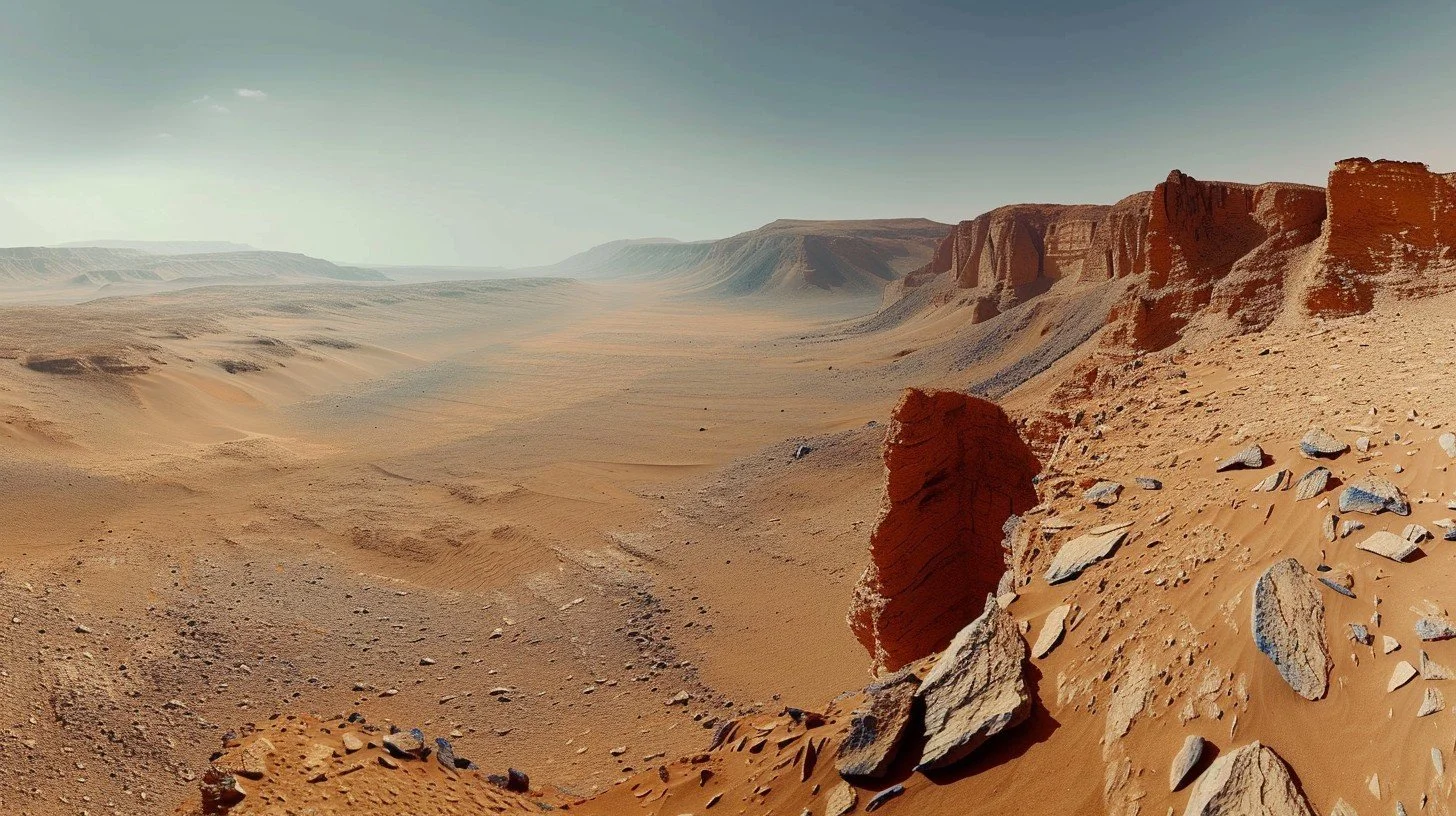
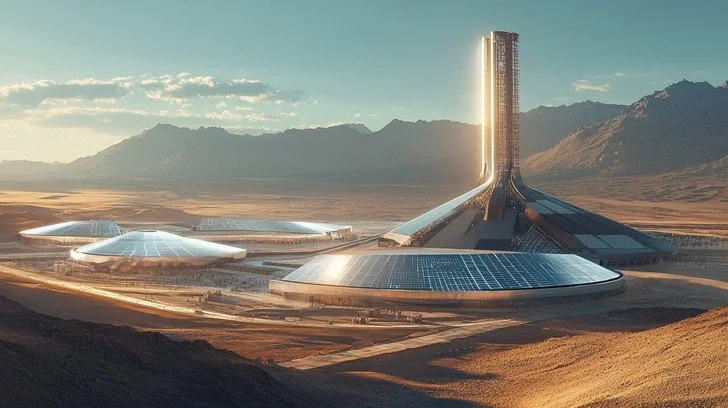
Image by StockCake
After pulling from the haze of the neural sedative, you spend the next two hours of your trip across the high plateau with the worst hangover imaginable pouring over documents given you by the ambassador’s aid.
Classified documents from G7, Terminus’ top spy agency. For agency and military chiefs only. Certainly nothing the four-year revolving functionaries are allowed to see.
About an archaeological dig on Dacian land in the south equatorial region – a natural depression known as the Borealis Trench – 125 years ago.
No information on what was found or what they were digging for. Just administrative details of a government funded archaeological excavation. Budget. Equipment requests. A list of the archaeologists and their institutions. And lots of missing pages.
More current – added to that earlier document, are satellite surveys showing an area that looks like it was once washed with liquid water. On the sun-facing side of a tidally locked planet that could never know liquid water unless…
“…this is impossible.”
Sora gives you a curious look. “Rather odd coming from you, Doctor. Wouldn’t you say?”
“That entire trench has been surveyed. By us – and by you. I’ve seen the…”
“…You’ve seen what was meant for you to see.”
You stare her in the eyes, for a long while considering what she’s telling you. That someone may have found the evidence that would support your theory - evidence you’ve spent your career searching for. Found it 125 years ago and kept it buried. Literally, along with the knowledge.
The question of course is why.
Breaking the heavy eye contact, you turn to the window for a last glimpse out at the desert before heading into the Dacian capital.
Wondering what’s out there. What they found, and again imagining our world the way you believe it once was. With oceans – forests. Days and nights. Seasons. Watching the sun cross the sky. And all of us sharing the same evolutionary past. Without the bias that keeps sending us into wars.
Through the first tunnel into the solar dome, you realise the intrigue you’re heading into – and curious why your Dacian ally on the committee felt it necessary to kidnap rather than ask you out for a visit.
And why the urgency.
A TRUE DESIRE FOR LEARNING: IGNORES BORDERS AND CONVENTIONS
“We shall meet in the place where there is no darkness.” (George Orwell)
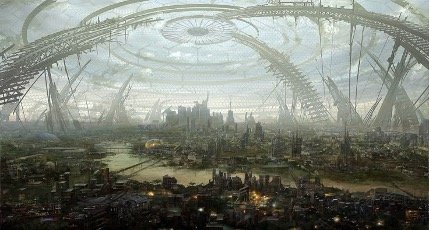
Image by StockCake
After descending from the roof and a trek through the Parliamentary compound, you’re at the window of an office overlooking the engineered river of the modern capital city beneath a solar dome when the ambassador steps in, in an obvious hurry.
“Are you ready?”
You turn to Sora assuming there was something she was to share but didn’t – then to Ambassador Gracchus. “For what exactly?”
She squints, as if you’ve asked something bothersome or daft then turns to her aid. “Like that all the way here?”
“Pretty much.”
“Wait a minute. I was drugged. And kidnapped.”
She rolls her eyes and heads for the door. “Fifteen minutes, Alexandre. Our ride’s on the roof.” You watch her out into the corridor before you can follow that up – then turn your eyes to Sora. Who reveals just a hint of superiority and how entertaining she finds you.
“You should go, Alexandre.”
“But…”
“…Truly. You should.”
Left suddenly with few actually no options, you head out and take after the ambassador who is moving towards the lifts, in true Dacian fashion nearly at a sprint.
Minutes later you’re with her in the back seat of a military quad-copter lifting off from the roof pad heading for the south Aero-way with its glass panels already opening.
The four, horizontal props are loud. A spinning grinding sound that reminds you of an industrial saw. On your way out through the dome, Gracchus leans to you and speaks above the whir. “The documents from the first excavation.”
“I read them on my way.”
“Thoughts?”
“Lots of missing pages.”
She stares with savvy, probing eyes – as if extracting your speculations of what exists on those pages. Dacian politicians are skilled. They draw meaning from micro-expressions. Almost telepathic; unnerving at times.
“Quite right,”she says, then leans back and turns her eyes to the window. “Rest if you can. It’s a journey.”
The evasive response is also Dacian. They pride themselves on saying only what’s necessary when necessary and love watching their counterparts squirm during the exchange.
For the next four hours you watch the terrain below change from high desert to baked mountains. Then to lava flows showing the planet’s volcanic past.
This isn’t your first time here. As advisor to the Science Committee, you’ve had the opportunity to explore much of the planet. But the Dacian southern hemisphere? You’ll be the first from Terminus. The first in the last 125 years it seems.
Now approaching the Borealis Trench – a vast depression expanding from horizon to horizon, Kalea Gracchus leans over.
“Most scientists believe we came from different planets. You believe we originated here.” Not sure where she’s going with this, or what that was meant to elicit, you watch her turn back to the window. Patient and waiting.
“It’s more logical.”
“Why?”
“We haven’t found an organic molecule out there. Neither have you.”
The quad-copter begins to descend to the base of an ancient crater facing a rise dotted with caves. In the clearing are desert tents in long rows with heavy equipment and Dacian engineers and scientists everywhere.
The ambassador goes to climb out – shooting you a glance on her way. “Be weird if you both had it right, huh?”
You’re suddenly stuck while pulling on an environment helmet. Wondering what she meant and annoyed at how planned the exchange was.
THE SEARCH FOR TRUTH: AND A MEASURE OF WISDOM
“Born of the sun, they travelled a short while towards the sun.” (Stephen Spender – The Truly Great)
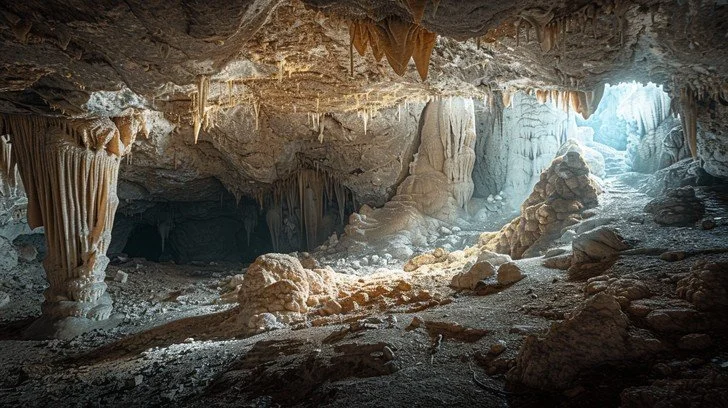
Image by StockCake
Passing the tents on your way into the largest cave, you note the activity. The camp is being disassembled and loaded onto palettes. This excavation is over. But why?
You catch the ambassador on her way in, pull off your helmet and take a moment to adjust to the air that burns in your lungs.
“What did you mean? And why are they breaking everything down?”
“Your military is on its way. None of this will be here tomorrow.”
You follow her in heading for a lift crane placed in an odd, trapezoidal hole the size of a tennis court lit with post lights – and others mounted on the walls. And a bluish brightness emanating up from below.
The ambassador stops at the crane and turns to you. “If we hadn’t taken you, your country would have. And you’d be dead rather than moments away from the answers you’ve been searching for.” She pulls back the small door allowing in. “Please.”
Moments later you’re descending – perhaps a kilometre down into a hole that looks laser cut – the walls smooth like glass.
It only takes moments for you to realise – the technology to cut this is technology neither of you have. And suddenly you’re tying this together with her comment – about you both having it right.
With your mind racing through images, the reality of this finally taking hold, you peer over the side down into the depths. “How old?”
“600 million years, I’m told. After the impact.”
“Impact.”
She turns to you. “You modelled it. Presented it. Got famous and ridiculed along the way. Now we need more from you. Their technology. Find out what you can about them, their purpose in coming here and who may have been here before.”
“Wait. What about your scientists?”
She shakes her head and looks over the side. “Nothing.”
And with that declaration, you’re aware - why you were enlisted. Yes, you believe, and yes, you’re someone they trust. But more importantly, you’re a competent computer scientist who may make this costly endeavour pay off for them before your country seals it forever.
You’re suddenly descending into a fantasy – a dream you’ve cultivated since graduate school and oddly, beyond the exhilaration, you’re feeling wholly unprepared.
All you can do is follow your mind exploding with questions.
ONLY WHEN MINDS SHARE: CAN DEEP LEARNING BEGIN
“Nothing in life is to be feared, it is only to be understood.” (Marie Curie)
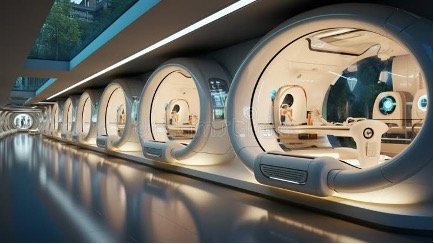
Image by StockCake
The walk into the alien lab is paralysing, mesmerising, unsettling in ways. 600 million years, and it looks new. And the technology is far beyond anything even your futurists and science fiction writers have sketched in their speculative works.
Oval rooms where they experimented on the beings that would one day possess the necessary characteristics to inhabit a tidally locked world. A world of extremes.
But what experiments? Purely synthetic? Genetic engineering with inorganic compounds? Did they use remnants of the indigenous inhabitants of this world and modify them?
Or did they, as a Dacian geneticist suggested, bring embryos with them? Three unique samples. Each from a different world. One near to its star, another in a temperate zone and a third from a distant, ice giant.
What puzzled the Dacians and you at first, is the lack of a master control. All their technology appears to be distributed into the oval procedure rooms.
You choose one and enter. Almost immediately a smooth, glass panel on the wall behind the examination table lights with odd, glowing characters in steel blue. Dazzling, incomprehensible and purely alien.
Sitting, facing it, you begin exploring, trying to gain access when suddenly, the symbols begin moving out from the plate - filling the room like a breathable liquid. In moments, you’re literally swimming inside in a soup of these alien characters. Long, spiralling strings – luminous, semi-transparent – flooding the room like a bioluminescent mist.
The feeling as they pass into and through you is hypnotic – like an intense psychedelic experience – filling your mind with images and sounds and knowledge. And the obviousness that you’ve merged with their technology – illogically and unreservedly you embrace.
You close your eyes, and you’re back 600-million, 800-million or billions of years – hovering in space looking down at the lush planet of blue oceans and green and brown land masses. Mountains – river valleys. Polar ice sheets and vast plains.
Closer – farms and cities populated with beings moving gracefully as if coordinated or choreographed to some unheard suite.
A rich, progressive culture of beings sharing a technological world bathed in sunlight and dark. The spinning, diurnal cycle you’ve envisioned and were convinced of. And argued endlessly.
When you open your eyes, you’re on the floor outside the procedure room surrounded by Dacians. A doctor, a pair of scientists and the ambassador.
For minutes you lie there unable to speak. Just living inside the images and sensations with your picture of the past and present and of the post-human civilisation that brought you here now complete.
You look at the ambassador. “We have to leave.”
“Why?”
You climb to your feet. Shaky, you spin, searching for the lift and start running with Gracchus and the others following.
“Wait…! Alexandre!”
“We have to leave this place!” You reach the lift crane and turn. “It’s still here.”
“It?”
“It- they? It’s a collective. Still running the experiment. But it’s not the experiment you think.” She and the others climb in. You look up. “How long? The Tridents.”
“They should be entering the Trench now. Twenty minutes.”
You look at her. “It’s maintaining a shared consciousness with every creature on the planet. Playing out a billion-year experiment. Everything about us was engineered. Our biases and hatreds? They’re not ours. They’re theirs!”
“For what purpose?”
You turn to face her. “Sustenance. We’re feeding them what they lost when they surrendered their biology. And Supremacy, I think. Should we ever grow to challenge them, they’d simply have us fight each other! And feed off that!”
She stares for a moment with indecision in her eyes. Then persuaded, she nods and looks up – and begins planning her plea to the commanders – and to the Committee of what should come next.
ACCEPTING TRUE STRENGTH: IS THE STRENGTH WE FIND IN UNITY
“Our birth is but a sleep and a forgetting: The soul that rises with us, our life’s Star.” (William Wordsworth)

Image by StockCake
After the ride up in the lift crane, you’re handed an environment helmet by a Dacian physician. Fitting it; you speak to the ambassador. “They need to know. The truth. And they’ll need to do more than reseal it.”
She takes her scientist by the arm, orders him to contact the Terminus commanders with an urgent request that they speak before they proceed. Then returns to you.
“What else did you learn?”
“Of them?” You take a moment before slipping on the mask. Replaying the experience. The memories you were given. What you saw – what you felt. You look her in the eyes. “Cold. Emotionless. Efficient parasites living off our passions and enthusiasms. And hatreds. Which seem to satisfy them most. Our innate revulsion for each other… it satiates them. This… this wasn’t altruism. It was for them. Their needs.”
She looks at you – oddly intrigued by your passionate disgust. Admiring you. Understanding you. Appreciating you more. The idealist who dared to see the world as changeable.
And then she does something you would never have expected - of her or of any Dacian. She takes your hand and pulls you close; looking you in the eyes, she leans in and kisses you.
At that moment, you feel the distaste of the shared consciousness within you – knowing the bias we feel is alien to us – from something occupying us – feeding on us. And in defiance of that, you reach a hand to her face – and leave it there on her cheek and return the kiss and feel the revulsion of the collective depart. Leaving you quiet and calm.
An hour later, you’re in the quad-copter with the ambassador lifting off from the Borealis Trench possibly for the last time. With the evidence you’ve been searching for – and knowledge beyond imagination.
Together you look out at the engineers from both worlds collaborating - hauling heavy explosives into the caves. An idealist’s dream. Your dream always.
And you, appreciating even more your friend for her trust in you and persuasive skills with the commanders and Committee. Declaring and claiming our independence - on a planet you’ll share peacefully in time.
Mark Thomas